

.svg)


How We Support Educators
Clear data, real-world insight, and tools that support what you teach, share, and recommend.
.svg)
Product
Our testing and treatment solutions are built for the realities of dentistry— delivering reliable results and consistent performance over time. From waterline and spore testing to treatment protocols, we focus on what actually works, so what you recommend is supported in the operatory, not just on paper.


Process
Our approach is structured, repeatable, and built to scale. From implementation to ongoing monitoring, we focus on consistency and transparency so results can be trusted across time, teams, and environments.


Partnership
We work alongside you as a contributor to safer, stronger dentistry. With Clear™, you can see how practices and regions are actually performing—so your guidance is informed by real data, not assumptions. Paired with products that are tested and trusted across the industry, you have the visibility and credibility to support what comes next.
.avif)

People
We are scientists, researchers, and experts committed to advancing safer dentistry. Our work is grounded in evidence, shaped by real-world application, and shared with transparency—so what we contribute adds to the field, not the noise.

.svg)
What ProEducators Are Saying
.svg)

.svg)
%20(1).png)
.svg)

.png)
Meet Our Director of Education

Meet Kellie!
Kellie is our Director of Education and a dental unit waterline expert. Over the past 9 years, she has worked with thousands of dental pros, helping them achieve safe water and foster a culture of safety in their practices.
Popular Resources for Your Clients
Compliance Management
ProEdge Clear™ for DSOs


Compliance Management
ProEdge Clear™ for Private Practices
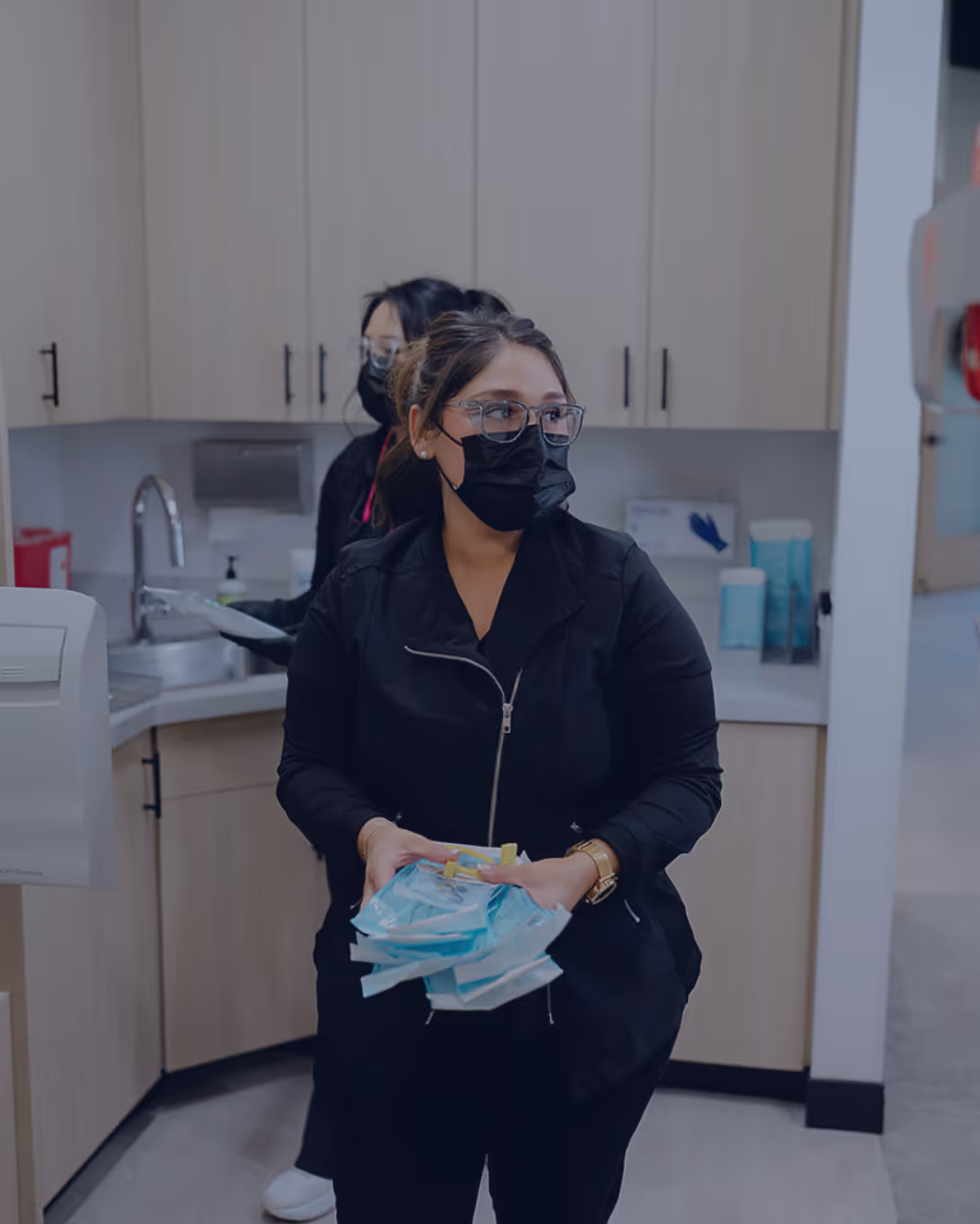
Waterline Maintenance
The 3 Steps for Safe Water
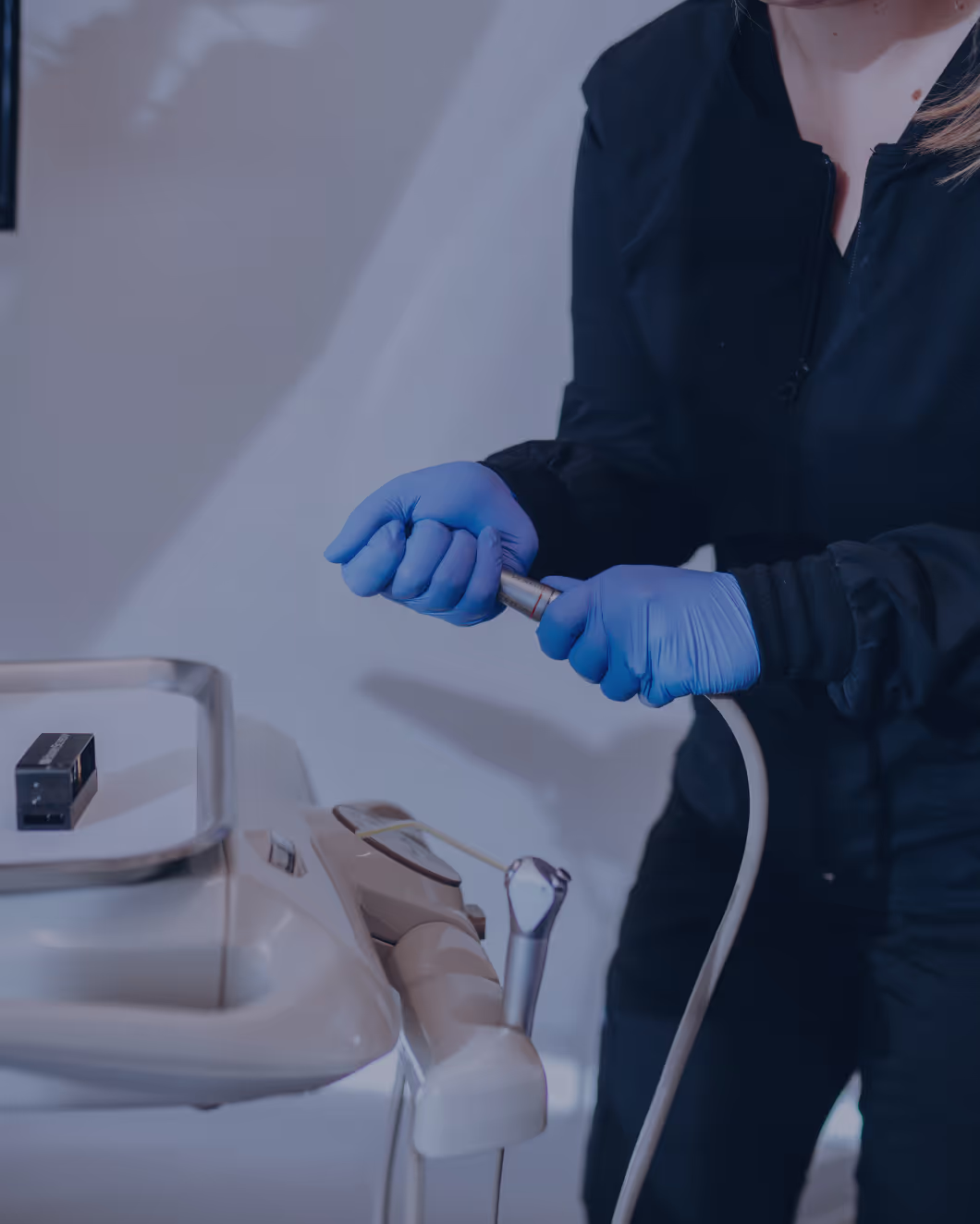
Infection Prevention Toolkits Built for Dentistry

.svg)



You Have Got Questions. We Have Answers.

Still Need Help?
Get in Touch


What are the CDC Guidelines Exactly?
The CDC aligns with the EPA in recommending that dental unit waterlines remain at or below 500 colony forming units (CFUs)/mL. Beyond that, guidance can vary, which is why we’ve compiled a state-by-state resource to help you stay informed and aligned with current expectations.
How often do waterlines need to be shocked?
All dental waterlines need to be shocked regularly. We typically recommend quarterly shocking, unless your testing results indicate you can go longer. If you’re starting a waterline maintenance plan, shocking is the best place to begin.
While some products or systems suggest shocking may not be necessary, research—including the Molinari Study—shows that biofilm still develops over time. Regular shocking remains an important part of maintaining safe water, regardless of your water source or treatment method.
You should shock dental unit waterlines in any of the following situations:
Before starting or changing a treatment protocol
After a failed test (microbial counts > 500 CFU/mL)
As part of routine biofilm and bacteria control
When replacing or supplementing a continuous treatment solution
If you’re ready to begin, you can get started here.
If an operatory fails a waterline test, does it need to be shut down?
Decisions around operatory closure are made at the discretion of the doctor. What matters most is taking action quickly once a failed result is identified.
In most cases, the first step is to shock the waterlines and retest to confirm that counts have returned to acceptable levels. From there, you can determine next steps with more clarity.
If you receive a failing result and aren’t sure what to do next, our team is here to help you work through a clear path forward.
Why should my clients designate an infection control coordinator in their office?
Designating an infection control coordinator helps bring consistency and clarity to infection prevention in your practice. This person serves as a central point of focus—helping ensure protocols are followed, questions are answered, and standards are maintained.
They often take the lead on training, stay current on guidelines, and help the team understand how daily actions connect to patient and staff safety. When something needs attention, they help guide the next steps so nothing is left unclear.
With someone owning this responsibility, the work becomes more organized and easier for the entire team to keep up with.
Here are some helpful resources to help infection control coordinators get started.
Why does BluTube have two straws instead of one?
BluTube is designed with two straws to maintain consistent treatment strength over time. While some products are intended to last up to a year, treatment effectiveness can begin to decline after several months.
By including a second straw, BluTube allows you to refresh the system partway through the year—helping maintain effectiveness and support more consistent biofilm control over time.
Click here to learn more about how BluTube supports your waterline maintenance protocol.