

.svg)
.avif)
Alabama
Waterline Requirements
In the state of Alabama, it is required to follow the CDC guidelines as outlined in the 2003 “Guidelines for Infection Control in Dental Health-Care Settings”.
Here’s what 2003 CDC recommendations say:
- Ensure dental unit water meets EPA standard of <500 CFU/mL.
- Test your water according to dental unit manufacturers recommendations (ProEdge recommends quarterly).
- Use sterile water and delivery system during surgical procedures.
Additionally, Alabama requires two hours of continuing education in infection control every two years. Register for a qualifying dental unit waterline safety CE course here.
State dental board source | Last Updated April 9, 2025
Spore Testing Requirements
Testing is required weekly.
According to 270-X-2.15: "All dental offices must conform to and comply with the current recommendations and guidelines of the Centers for Disease Control and Prevention (C.D.C.) relating to infection control practices for dentistry and/or dental offices."
According to the Center for Disease Control:
- "Use mechanical, chemical, and biological monitors according to the manufacturer's instructions to ensure the effectiveness of the sterilization process (IB).
- Monitor each load with mechanical (e.g., time, temperature, and pressure) and chemical indicators (II).
- Place a chemical indicator on the inside of each package. If the internal indicator is not visible from the outside, also place an exterior chemical indicator on the package (II).
- Place items/packages correctly and loosely into the sterilizer so as not to impede penetration of the sterilant (IB).
- Do not use instrument packs if mechanical or chemical indicators indicate inadequate processing (IB).
- Monitor sterilizers at least weekly by using a biological indicator with a matching control (i.e., biological indicator and control from same lot number) (IB).
- Use a biological indicator for every sterilizer load that contains an implantable device. Verify results before using the implantable device, whenever possible (IB)."
State Dental Board source | Last Updated March 20, 2026
Alaska
Waterline Requirements
In the state of Alaska, it is required to follow the CDC guidelines as outlined in the 2003 “Guidelines for Infection Control in Dental Health-Care Settings”.
Here’s what 2003 CDC recommendations say:
- Ensure dental unit water meets EPA standard of <500 CFU/mL.
- Test your water according to dental unit manufacturers recommendations (ProEdge recommends quarterly).
- Use sterile water and delivery system during surgical procedures.
State dental board source | Last Updated April 9, 2025
Spore Testing Requirements
Testing is recommended weekly.
According to the Center for Disease Control:
- "Use mechanical, chemical, and biological monitors according to the manufacturer's instructions to ensure the effectiveness of the sterilization process (IB).
- Monitor each load with mechanical (e.g., time, temperature, and pressure) and chemical indicators (II).
- Place a chemical indicator on the inside of each package. If the internal indicator is not visible from the outside, also place an exterior chemical indicator on the package (II).
- Place items/packages correctly and loosely into the sterilizer so as not to impede penetration of the sterilant (IB).
- Do not use instrument packs if mechanical or chemical indicators indicate inadequate processing (IB).
- Monitor sterilizers at least weekly by using a biological indicator with a matching control (i.e., biological indicator and control from same lot number) (IB).
- Use a biological indicator for every sterilizer load that contains an implantable device. Verify results before using the implantable device, whenever possible (IB)."
Center for Disease Control source | Last Updated March 20, 2026
Arizona
Waterline Requirements
In the state of Arizona, it is required to follow the CDC guidelines as outlined in the 2003 “Guidelines for Infection Control in Dental Health-Care Settings”.
Here’s what 2003 CDC recommendations say:
- Ensure dental unit water meets EPA standard of <500 CFU/mL.
- Test your water according to dental unit manufacturers recommendations (ProEdge recommends quarterly).
- Use sterile water and delivery system during surgical procedures.
Additionally, Arizona requires three hours of continuing education in infection control for relicensure. Register for a qualifying dental unit waterline safety CE course here.
State dental board source | Last Updated April 9, 2025
Spore Testing Requirements
Testing is required weekly.
Arizona State Board of Dental Examiners states: "The Arizona State Board of Dental Examiners has adopted the most current State OSHA required procedures for worker protection and the most current CDC recommended Infection Control Practices for Dentistry as the guidelines for infection control. "
According to the Center for Disease Control:
- "Use mechanical, chemical, and biological monitors according to the manufacturer's instructions to ensure the effectiveness of the sterilization process (IB).
- Monitor each load with mechanical (e.g., time, temperature, and pressure) and chemical indicators (II).
- Place a chemical indicator on the inside of each package. If the internal indicator is not visible from the outside, also place an exterior chemical indicator on the package (II).
- Place items/packages correctly and loosely into the sterilizer so as not to impede penetration of the sterilant (IB).
- Do not use instrument packs if mechanical or chemical indicators indicate inadequate processing (IB).
- Monitor sterilizers at least weekly by using a biological indicator with a matching control (i.e., biological indicator and control from same lot number) (IB).
- Use a biological indicator for every sterilizer load that contains an implantable device. Verify results before using the implantable device, whenever possible (IB)."
State Dental Board source | Last Updated March 20, 2026
Arkansas
Waterline Requirements
In the state of Arkansas, it is required to follow the CDC guidelines as outlined in the 2003 “Guidelines for Infection Control in Dental Health-Care Settings”.
Here’s what 2003 CDC recommendations say:
- Ensure dental unit water meets EPA standard of <500 CFU/mL.
- Test your water according to dental unit manufacturers recommendations (ProEdge recommends quarterly).
- Use sterile water and delivery system during surgical procedures.
Additionally, Arkansas requires one hour of continuing education in infection control every two years. Register for a qualifying dental unit waterline safety CE course here.
State dental board source | Last Updated April 9, 2025
Spore Testing Requirements
Testing is required monthly.
According to the Arkansas State Board of Dental Examiners:
"Sterilization monitoring
- Monitor each load with mechanical (e.g., time, temperature, and pressure) and chemical indicators. Color change markings on bags or autoclave tape are acceptable indicators.
- Do not use instrument packs if mechanical or chemical indicators indicate inadequate processing.
- Monitor sterilizers at least monthly by using a biological indicator (spore test) with a matching control).
- In case of a positive spore test, remove the sterilizer from service and retest. If the repeat spore test is negative put the sterilizer back in service.
- If the repeated spore test is positive, remove the sterilizer from use until it has been inspected or repaired, recall and reprocess all items processed since the last negative test.
- Maintain sterilization records or biological spore testing for three years."
State Dental Board source | Last Updated March 20, 2026
California
Waterline Requirements
In the state of California, it is recommended to follow the CDC guidelines as outlined in the 2003 “Guidelines for Infection Control in Dental Health-Care Settings”.
Here’s what 2003 CDC recommendations say:
- Ensure dental unit water meets EPA standard of <500 CFU/mL.
- Test your water according to dental unit manufacturers recommendations (ProEdge recommends quarterly).
- Use sterile water and delivery system during surgical procedures.
Additionally, California requires two hours of continuing education in infection control. Register for a qualifying dental unit waterline safety CE course here.
State dental board source | Last Updated April 9, 2025
Spore Testing Requirements
Testing is required weekly.
According to the Dental Board of California:
"Sterilization and Disinfection:
(17) Proper functioning of the sterilization cycle of all sterilization devices shall be verified at least weekly through the use of a biological indicator (such as a spore test). Test results shall be documented and maintained for 12 months."
State Dental Board source | Last Updated March 20, 2026
Colorado
Waterline Requirements
In the state of Colorado, it is required to follow the CDC guidelines as outlined in the 2003 “Guidelines for Infection Control in Dental Health-Care Settings”.
Here’s what 2003 CDC recommendations say:
- Ensure dental unit water meets EPA standard of <500 CFU/mL.
- Test your water according to dental unit manufacturers recommendations (ProEdge recommends quarterly).
- Use sterile water and delivery system during surgical procedures.
Additionally, a licensee is also responsible for the compliance of unlicensed dental personnel.
Colorado also requires 16 of the 30 required continuing education hours to be clinical or science-based. Register for a qualifying dental unit waterline safety CE course here.
State dental board source | Last Updated April 9, 2025
Spore Testing Requirements
Testing is required weekly.
According to the Colorado Dental Board:
"Rule XVI. Infection Control
(17) In addition to meeting applicable standards of care, dentists and dental hygienists must follow the Centers for Disease Control and Prevention (CDC) 2003 “Guidelines for Infection Control in Dental Health-Care Settings”, including the CDC’s March 2016 “Summary of Infection Prevention Practices in Dental Settings”, and the Occupational Safety and Health Administration’s (OSHA) “Bloodborne Pathogens Standard”. A licensee is also responsible for the compliance of unlicensed dental personnel."
According to the Center for Disease Control:
- "Use mechanical, chemical, and biological monitors according to the manufacturer's instructions to ensure the effectiveness of the sterilization process (IB).
- Monitor each load with mechanical (e.g., time, temperature, and pressure) and chemical indicators (II).
- Place a chemical indicator on the inside of each package. If the internal indicator is not visible from the outside, also place an exterior chemical indicator on the package (II).
- Place items/packages correctly and loosely into the sterilizer so as not to impede penetration of the sterilant (IB).
- Do not use instrument packs if mechanical or chemical indicators indicate inadequate processing (IB).
- Monitor sterilizers at least weekly by using a biological indicator with a matching control (i.e., biological indicator and control from same lot number) (IB).
- Use a biological indicator for every sterilizer load that contains an implantable device. Verify results before using the implantable device, whenever possible (IB)."
State Dental Board source | Last Updated March 20, 2026
Connecticut
Waterline Requirements
In the state of Connecticut, it is required to follow the CDC guidelines as outlined in the 2003 “Guidelines for Infection Control in Dental Health-Care Settings”.
Here’s what 2003 CDC recommendations say:
- Ensure dental unit water meets EPA standard of <500 CFU/mL.
- Test your water according to dental unit manufacturers recommendations (ProEdge recommends quarterly).
- Use sterile water and delivery system during surgical procedures.
Additionally, Connecticut requires one hour of continuing education in infection control. Register for a qualifying dental unit waterline safety CE course here.
State dental board source | Last Updated April 9, 2025
Spore Testing Requirements
Testing is required weekly.
According to the Connecticut Department of Public Health:
"The Department’s primary source for standards is the 'Guidelines for Infection Control in Dental Health‐Care Settings' published by the Centers for Disease Control and Prevention in 2003"
According to the Center for Disease Control:
- "Use mechanical, chemical, and biological monitors according to the manufacturer's instructions to ensure the effectiveness of the sterilization process (IB).
- Monitor each load with mechanical (e.g., time, temperature, and pressure) and chemical indicators (II).
- Place a chemical indicator on the inside of each package. If the internal indicator is not visible from the outside, also place an exterior chemical indicator on the package (II).
- Place items/packages correctly and loosely into the sterilizer so as not to impede penetration of the sterilant (IB).
- Do not use instrument packs if mechanical or chemical indicators indicate inadequate processing (IB).
- Monitor sterilizers at least weekly by using a biological indicator with a matching control (i.e., biological indicator and control from same lot number) (IB).
- Use a biological indicator for every sterilizer load that contains an implantable device. Verify results before using the implantable device, whenever possible (IB)."
State Dental Board source | Last Updated March 20, 2026
Delaware
Waterline Requirements
In the state of Delaware, it is recommended to follow the CDC guidelines as outlined in the 2003 “Guidelines for Infection Control in Dental Health-Care Settings”.
Here’s what 2003 CDC recommendations say:
- Ensure dental unit water meets EPA standard of <500 CFU/mL.
- Test your water according to dental unit manufacturers recommendations (ProEdge recommends quarterly).
- Use sterile water and delivery system during surgical procedures.
Additionally, Delaware requires two hours of continuing education in infection control. Register for a qualifying dental unit waterline safety CE course here.
State dental board source | Last Updated April 9, 2025
Spore Testing Requirements
Testing is recommended weekly.
According to the Center for Disease Control:
- "Use mechanical, chemical, and biological monitors according to the manufacturer's instructions to ensure the effectiveness of the sterilization process (IB).
- Monitor each load with mechanical (e.g., time, temperature, and pressure) and chemical indicators (II).
- Place a chemical indicator on the inside of each package. If the internal indicator is not visible from the outside, also place an exterior chemical indicator on the package (II).
- Place items/packages correctly and loosely into the sterilizer so as not to impede penetration of the sterilant (IB).
- Do not use instrument packs if mechanical or chemical indicators indicate inadequate processing (IB).
- Monitor sterilizers at least weekly by using a biological indicator with a matching control (i.e., biological indicator and control from same lot number) (IB).
- Use a biological indicator for every sterilizer load that contains an implantable device. Verify results before using the implantable device, whenever possible (IB)."
Center for Disease Control source | Last Updated March 20, 2026
Florida
Waterline Requirements
In the state of Florida, it is recommended to follow the CDC guidelines as outlined in the 2003 “Guidelines for Infection Control in Dental Health-Care Settings”.
Here’s what 2003 CDC recommendations say:
- Ensure dental unit water meets EPA standard of <500 CFU/mL.
- Test your water according to dental unit manufacturers recommendations (ProEdge recommends quarterly).
- Use sterile water and delivery system during surgical procedures.
State dental board source | Last Updated April 9, 2025
Spore Testing Requirements
Testing is required monthly
According to the Florida Board of Dentistry
"The procedures and equipment used for sterilization must have their efficacy tested periodically. Adequacy of steam under pressure (e.g. autoclave) or chemical vapor sterilization must have their efficacy verified by appropriate biological monitoring at least once every 40 hours (2400 minutes) of use or at least once every thirty days, whichever comes first. Dry heat and ethylene oxide sterilizers must have their efficacy verified with appropriate biological monitoring every 120 hours of operation at sterilization parameters or every thirty days, whichever comes first. (Use time is determined by multiplying the number of cycles by the individual cycle time.) Disinfectant/sterilants as set forth in paragraph (e), of subsection (1), above, when used instead of heat sterilization procedures, must be used according to the manufacturer’s recommended dilution and exposure time and must be changed according to the manufacturer’s recommendations."
State dental board source | Last Updated March 20, 2026
Georgia
Waterline Requirements
On April 1st, 2025, the Georgia Board of Dentistry passed Rule 150-8-.05 which outlines the requirements for dental unit waterline testing and maintenance.
Dental professionals must:
- Test their dental unit water quarterly to ensure it the meets EPA standard of <500 CFU/mL.
- Must properly document their test results and make them accessible for a minimum of 5 years.
- Upon a waterline test failure, remediate immediately and retest to ensure a passing result of 500 CFU/ml or less.
Additionally, Georgia requires two hours of continuing education infection control. One of these hours must include dental unit waterline safety.
State dental board source | Last Updated April 9, 2025
Spore Testing Requirements
Testing is required weekly
According to the Georgia Board of Dentistry:
" ...all dentists are required by law to adhere to CDC infection control standards..."
According to the Center for Disease Control:
- "Use mechanical, chemical, and biological monitors according to the manufacturer's instructions to ensure the effectiveness of the sterilization process (IB).
- Monitor each load with mechanical (e.g., time, temperature, and pressure) and chemical indicators (II).
- Place a chemical indicator on the inside of each package. If the internal indicator is not visible from the outside, also place an exterior chemical indicator on the package (II).
- Place items/packages correctly and loosely into the sterilizer so as not to impede penetration of the sterilant (IB).
- Do not use instrument packs if mechanical or chemical indicators indicate inadequate processing (IB).
- Monitor sterilizers at least weekly by using a biological indicator with a matching control (i.e., biological indicator and control from same lot number) (IB).
- Use a biological indicator for every sterilizer load that contains an implantable device. Verify results before using the implantable device, whenever possible (IB)."
State dental board source | Last Updated March 20, 2026
Hawaii
Waterline Requirements
In the state of Hawaii, it is required to follow the CDC guidelines as outlined in the 2003 “Guidelines for Infection Control in Dental Health-Care Settings”. the CDC guidelines as outlined in the 2003 “Guidelines for Infection Control in Dental Health-Care Settings”.
Here’s what 2003 CDC recommendations say:
- Ensure dental unit water meets EPA standard of <500 CFU/mL.
- Test your water according to dental unit manufacturers recommendations (ProEdge recommends quarterly).
- Use sterile water and delivery system during surgical procedures.
State dental board source | Last Updated April 9, 2025
Spore Testing Requirements
Testing is required weekly
According to the Hawaii Administrative Rules:
"§16-79-8 Approved infection control practices
Licensed dentists and licensed dental hygienists shall practice levels of infection control consistent with the guidelines and recommendations of the U.S. Department of Health and Human Services, Centers for Disease Control and Prevention (CDC) and the ADA."
State dental board source | Last Updated March 20, 2026
Idaho
Waterline Requirements
You must follow the CDC guidelines as outlined in the 2003 “Guidelines for Infection Control in Dental Health-Care Settings”.
Here’s what 2003 CDC recommendations say:
- Ensure dental unit water meets EPA standard of <500 CFU/mL.
- Test your water according to dental unit manufacturers recommendations (ProEdge recommends quarterly).
- Use sterile water and delivery system during surgical procedures.
State dental board source | Last Updated April 9, 2025
Spore Testing Requirements
Testing is required weekly
According to the Rules of the Idaho State Board of Dentistry:
040. UNPROFESSIONAL CONDUCT (RULE 40).
A dentist or hygienist shall not engage in unprofessional conduct in the course of his practice. Unprofessional
conduct by a person licensed under the provisions of Title 54, Chapter 9, Idaho Code, is defined as, but not limited to...
09. Office Conditions. Unsanitary or unsafe office conditions, as determined by the customary
practice and standards of the dental profession in the state of Idaho and current recommendations of the American
Dental Association and the Centers for Disease Control as referred to in Section 004. (7-1-93)
According to the Center for Disease Control:
- "Use mechanical, chemical, and biological monitors according to the manufacturer's instructions to ensure the effectiveness of the sterilization process (IB).
- Monitor each load with mechanical (e.g., time, temperature, and pressure) and chemical indicators (II).
- Place a chemical indicator on the inside of each package. If the internal indicator is not visible from the outside, also place an exterior chemical indicator on the package (II).
- Place items/packages correctly and loosely into the sterilizer so as not to impede penetration of the sterilant (IB).
- Do not use instrument packs if mechanical or chemical indicators indicate inadequate processing (IB).
- Monitor sterilizers at least weekly by using a biological indicator with a matching control (i.e., biological indicator and control from same lot number) (IB).
- Use a biological indicator for every sterilizer load that contains an implantable device. Verify results before using the implantable device, whenever possible (IB)."
State Dental Board source | Last Updated March 20, 2026
Illinois
Waterline Requirements
You should follow the CDC guidelines as outlined in the 2003 “Guidelines for Infection Control in Dental Health-Care Settings”.
Here’s what 2003 CDC recommendations say:
- Ensure dental unit water meets EPA standard of <500 CFU/mL.
- Test your water according to dental unit manufacturers recommendations (ProEdge recommends quarterly).
- Use sterile water and delivery system during surgical procedures.
Last Updated April 9, 2025
Spore Testing Requirements
Testing is recommended weekly
According to the Center for Disease Control:
- "Use mechanical, chemical, and biological monitors according to the manufacturer's instructions to ensure the effectiveness of the sterilization process (IB).
- Monitor each load with mechanical (e.g., time, temperature, and pressure) and chemical indicators (II).
- Place a chemical indicator on the inside of each package. If the internal indicator is not visible from the outside, also place an exterior chemical indicator on the package (II).
- Place items/packages correctly and loosely into the sterilizer so as not to impede penetration of the sterilant (IB).
- Do not use instrument packs if mechanical or chemical indicators indicate inadequate processing (IB).
- Monitor sterilizers at least weekly by using a biological indicator with a matching control (i.e., biological indicator and control from same lot number) (IB).
- Use a biological indicator for every sterilizer load that contains an implantable device. Verify results before using the implantable device, whenever possible (IB)."
Center for Disease Control source | Last Updated March 20, 2026
Indiana
Waterline Requirements
You should follow the CDC guidelines as outlined in the 2003 “Guidelines for Infection Control in Dental Health-Care Settings”.
Here’s what 2003 CDC recommendations say:
- Ensure dental unit water meets EPA standard of <500 CFU/mL.
- Test your water according to dental unit manufacturers recommendations (ProEdge recommends quarterly).
- Use sterile water and delivery system during surgical procedures.
State dental board source | Last Updated April 9, 2025
Spore Testing Requirements
Testing is required weekly
According to the Indiana State Department of Health:
"Heat sterilization procedures are to be monitored, which shall include documentation of this monitoring,including:
monitoring each sterilization cycle, and documentation of this monitoring;
using chemical indicators (when sterilizing packaged non-disposable equipment), and documentation of this use;
testing each sterilizer with biological indicators (spore tests) within 7 days prior to any current use of a sterilizer, and documentation of this testing; and
maintaining all sterilizers according to manufacturer recommendations, and documentation of this maintenance."
State Dental Board source | Last Updated March 20, 2026
Iowa
Waterline Requirements
You must follow the CDC guidelines as outlined in the 2003 “Guidelines for Infection Control in Dental Health-Care Settings”.
Here’s what 2003 CDC recommendations say:
- Ensure dental unit water meets EPA standard of <500 CFU/mL.
- Test your water according to dental unit manufacturers recommendations (ProEdge recommends quarterly).
- Use sterile water and delivery system during surgical procedures.
Additionally, Iowa requires two hours of continuing education in infection control. Register for a qualifying dental unit waterline safety CE course here.
State dental board source | Last Updated April 9, 2025
Spore Testing Requirements
Testing is required weekly
According to the Iowa Dental Board:
"All dental personnel are required to comply with standard precautions for preventing and controlling infectious diseases and managing personnel health and safety concerns related to infection control, as required or recommended for dentistry by the Centers for Disease Control and Prevention (CDC) of the United States Department of Health and Human Services. Compliance with CDC recommendations is required. Board staff may conduct office inspections to determine compliance with sanitation and infection control standards."
According to the Center for Disease Control:
- "Use mechanical, chemical, and biological monitors according to the manufacturer's instructions to ensure the effectiveness of the sterilization process (IB).
- Monitor each load with mechanical (e.g., time, temperature, and pressure) and chemical indicators (II).
- Place a chemical indicator on the inside of each package. If the internal indicator is not visible from the outside, also place an exterior chemical indicator on the package (II).
- Place items/packages correctly and loosely into the sterilizer so as not to impede penetration of the sterilant (IB).
- Do not use instrument packs if mechanical or chemical indicators indicate inadequate processing (IB).
- Monitor sterilizers at least weekly by using a biological indicator with a matching control (i.e., biological indicator and control from same lot number) (IB).
- Use a biological indicator for every sterilizer load that contains an implantable device. Verify results before using the implantable device, whenever possible (IB)."
State Dental Board source | Last Updated March 20, 2026
Kansas
Waterline Requirements
You should follow the CDC guidelines as outlined in the 2003 “Guidelines for Infection Control in Dental Health-Care Settings”.
Here’s what 2003 CDC recommendations say:
- Ensure dental unit water meets EPA standard of <500 CFU/mL.
- Test your water according to dental unit manufacturers recommendations (ProEdge recommends quarterly).
- Use sterile water and delivery system during surgical procedures.
State dental board source | Last Updated April 9, 2025
Spore Testing Requirements
Testing is required at least monthly, but potentially weekly depending on frequency of use.
According to the Kansas Dental Board:
"Biological spore testing devices shall be used on each sterilization unit after each six days of use, but not less often than each month, to verify that all pathogens have been killed. A log of spore testing shall be kept for three years for each sterilization unit."
State Dental Board source | Last Updated March 20, 2026
Kentucky
Waterline Requirements
You must follow the CDC guidelines as outlined in the 2003 “Guidelines for Infection Control in Dental Health-Care Settings”.
Here’s what 2003 CDC recommendations say:
- Ensure dental unit water meets EPA standard of <500 CFU/mL.
- Test your water according to dental unit manufacturers recommendations (ProEdge recommends quarterly).
- Use sterile water and delivery system during surgical procedures.
State dental board source | Last Updated April 9, 2025
Spore Testing Requirements
Testing is required weekly
According to the Kentucky Legislature:
Section 6. Infection Control Compliance. (1) Each licensed dentist in the Commonwealth of Kentucky shall: (a) Adhere to the standard precautions outlined in the Guidelines for Infection Control in Dental Health-Care Settings published by the Centers for Disease Control and Prevention...
According to the Center for Disease Control:
- "Use mechanical, chemical, and biological monitors according to the manufacturer's instructions to ensure the effectiveness of the sterilization process (IB).
- Monitor each load with mechanical (e.g., time, temperature, and pressure) and chemical indicators (II).
- Place a chemical indicator on the inside of each package. If the internal indicator is not visible from the outside, also place an exterior chemical indicator on the package (II).
- Place items/packages correctly and loosely into the sterilizer so as not to impede penetration of the sterilant (IB).
- Do not use instrument packs if mechanical or chemical indicators indicate inadequate processing (IB).
- Monitor sterilizers at least weekly by using a biological indicator with a matching control (i.e., biological indicator and control from same lot number) (IB).
- Use a biological indicator for every sterilizer load that contains an implantable device. Verify results before using the implantable device, whenever possible (IB)."
State Dental Board source | Last Updated March 20, 2026
Louisiana
Waterline Requirements
You must follow the CDC guidelines as outlined in the 2003 “Guidelines for Infection Control in Dental Health-Care Settings”.
Here’s what 2003 CDC recommendations say:
- Ensure dental unit water meets EPA standard of <500 CFU/mL.
- Test your water according to dental unit manufacturers recommendations (ProEdge recommends quarterly).
- Use sterile water and delivery system during surgical procedures.
State dental board source | Last Updated April 9, 2025
Spore Testing Requirements
Testing is recommended weekly
According to the Center for Disease Control:
- "Use mechanical, chemical, and biological monitors according to the manufacturer's instructions to ensure the effectiveness of the sterilization process (IB).
- Monitor each load with mechanical (e.g., time, temperature, and pressure) and chemical indicators (II).
- Place a chemical indicator on the inside of each package. If the internal indicator is not visible from the outside, also place an exterior chemical indicator on the package (II).
- Place items/packages correctly and loosely into the sterilizer so as not to impede penetration of the sterilant (IB).
- Do not use instrument packs if mechanical or chemical indicators indicate inadequate processing (IB).
- Monitor sterilizers at least weekly by using a biological indicator with a matching control (i.e., biological indicator and control from same lot number) (IB).
- Use a biological indicator for every sterilizer load that contains an implantable device. Verify results before using the implantable device, whenever possible (IB)."
Center for Disease Control source | Last Updated March 20, 2026
Maine
Waterline Requirements
You must follow the CDC guidelines as outlined in the 2003 “Guidelines for Infection Control in Dental Health-Care Settings”.
Here’s what 2003 CDC recommendations say:
- Ensure dental unit water meets EPA standard of <500 CFU/mL.
- Test your water according to dental unit manufacturers recommendations (ProEdge recommends quarterly).
- Use sterile water and delivery system during surgical procedures.
Additionally, Iowa requires two hours of continuing education in infection control. Register for a qualifying dental unit waterline safety CE course here.
State dental board source | Last Updated April 9, 2025
Spore Testing Requirements
Testing is required weekly
According to the Maine Board of Dental Examiners:
"Unprofessional conduct under 32 M.R.S.A. §1077(2)(F) includes, but is not limited to, the following:
...Failure to utilize Center for Disease Control and Prevention ("CDC") Guidelines for Infection Control in Dental Health-Care Settings, 2003 at the time of treatment...."
According to the Center for Disease Control:
- "Use mechanical, chemical, and biological monitors according to the manufacturer's instructions to ensure the effectiveness of the sterilization process (IB).
- Monitor each load with mechanical (e.g., time, temperature, and pressure) and chemical indicators (II).
- Place a chemical indicator on the inside of each package. If the internal indicator is not visible from the outside, also place an exterior chemical indicator on the package (II).
- Place items/packages correctly and loosely into the sterilizer so as not to impede penetration of the sterilant (IB).
- Do not use instrument packs if mechanical or chemical indicators indicate inadequate processing (IB).
- Monitor sterilizers at least weekly by using a biological indicator with a matching control (i.e., biological indicator and control from same lot number) (IB).
- Use a biological indicator for every sterilizer load that contains an implantable device. Verify results before using the implantable device, whenever possible (IB)."
State dental board source | Last Updated March 20, 2026
Maryland
Waterline Requirements
You must follow the CDC guidelines as outlined in the 2003 “Guidelines for Infection Control in Dental Health-Care Settings”.
Here’s what 2003 CDC recommendations say:
- Ensure dental unit water meets EPA standard of <500 CFU/mL.
- Test your water according to dental unit manufacturers recommendations (ProEdge recommends quarterly).
- Use sterile water and delivery system during surgical procedures.
Additionally, Maryland requires each dental office to designate a licensed supervising dentist specifically responsible for infection control activities, specifically including dental unit waterline testing. For more information, review House Bill 499.
Maryland also requires two hours of continuing education in Maryland-specific infection control. Register for a qualifying dental unit waterline safety CE course here.
State dental board source | Last Updated April 9, 2025
Spore Testing Requirements
Testing is required weekly
According to the Maryland Code Health and Occupations Section 4-315:
"Denials, reprimands, probations, suspensions, and revocations / Grounds (a) License to practice dentistry. -- Subject to the hearing provisions of § 4-318 of this subtitle, the Board may deny a general license to practice dentistry, a limited license to practice dentistry, or a teacher''s license to practice dentistry to any applicant, reprimand any licensed dentist, place any licensed dentist on probation, or suspend or revoke the license of any licensed dentist, if the applicant or licensee: (28) Except in an emergency life-threatening situation where it is not feasible or practicable, fails to comply with the Centers for Disease Control and Prevention guidelines on universal precautions..."
According to the Center for Disease Control:
- "Use mechanical, chemical, and biological monitors according to the manufacturer's instructions to ensure the effectiveness of the sterilization process (IB).
- Monitor each load with mechanical (e.g., time, temperature, and pressure) and chemical indicators (II).
- Place a chemical indicator on the inside of each package. If the internal indicator is not visible from the outside, also place an exterior chemical indicator on the package (II).
- Place items/packages correctly and loosely into the sterilizer so as not to impede penetration of the sterilant (IB).
- Do not use instrument packs if mechanical or chemical indicators indicate inadequate processing (IB).
- Monitor sterilizers at least weekly by using a biological indicator with a matching control (i.e., biological indicator and control from same lot number) (IB).
- Use a biological indicator for every sterilizer load that contains an implantable device. Verify results before using the implantable device, whenever possible (IB)."
State dental board source | Last Updated March 20, 2026
Massachusetts
Waterline Requirements
You must follow the CDC guidelines as outlined in the 2003 “Guidelines for Infection Control in Dental Health-Care Settings”.
Here’s what 2003 CDC recommendations say:
- Ensure dental unit water meets EPA standard of <500 CFU/mL.
- Test your water according to dental unit manufacturers recommendations (ProEdge recommends quarterly).
- Use sterile water and delivery system during surgical procedures.
State dental board source | Last Updated April 9, 2025
Spore Testing Requirements
Testing is required weekly
According to the Board of Registration in Dentistry:
"5.05: Infection Control, Occupational Safety and Health Standards, and Radiation Control Requirements
(1) Infection Control Practices. All persons licensed by the Board and all practices providing dental services are required to operate in compliance with the current Recommended Infection
Control in Dental Health-Care Settings - 2003, Centers for Disease Control and Prevention (CDC), U.S. Department of Health and Human Services, Atlanta" which states:
- "Use mechanical, chemical, and biological monitors according to the manufacturer's instructions to ensure the effectiveness of the sterilization process (IB).
- Monitor each load with mechanical (e.g., time, temperature, and pressure) and chemical indicators (II).
- Place a chemical indicator on the inside of each package. If the internal indicator is not visible from the outside, also place an exterior chemical indicator on the package (II).
- Place items/packages correctly and loosely into the sterilizer so as not to impede penetration of the sterilant (IB).
- Do not use instrument packs if mechanical or chemical indicators indicate inadequate processing (IB).
- Monitor sterilizers at least weekly by using a biological indicator with a matching control (i.e., biological indicator and control from same lot number) (IB).
- Use a biological indicator for every sterilizer load that contains an implantable device. Verify results before using the implantable device, whenever possible (IB)."
State dental board source | Last Updated March 20, 2026
Michigan
Waterline Requirements
You should follow the CDC guidelines as outlined in the 2003 “Guidelines for Infection Control in Dental Health-Care Settings”.
Here’s what 2003 CDC recommendations say:
- Ensure dental unit water meets EPA standard of <500 CFU/mL.
- Test your water according to dental unit manufacturers recommendations (ProEdge recommends quarterly).
- Use sterile water and delivery system during surgical procedures.
State dental board source | Last Updated April 9, 2025
Spore Testing Requirements
Testing is recommended weekly
According to the Center for Disease Control:
- "Use mechanical, chemical, and biological monitors according to the manufacturer's instructions to ensure the effectiveness of the sterilization process (IB).
- Monitor each load with mechanical (e.g., time, temperature, and pressure) and chemical indicators (II).
- Place a chemical indicator on the inside of each package. If the internal indicator is not visible from the outside, also place an exterior chemical indicator on the package (II).
- Place items/packages correctly and loosely into the sterilizer so as not to impede penetration of the sterilant (IB).
- Do not use instrument packs if mechanical or chemical indicators indicate inadequate processing (IB).
- Monitor sterilizers at least weekly by using a biological indicator with a matching control (i.e., biological indicator and control from same lot number) (IB).
- Use a biological indicator for every sterilizer load that contains an implantable device. Verify results before using the implantable device, whenever possible (IB)."
Center for Disease Control source | Last Updated March 20, 2026
Minnesota
Waterline Requirements
You must follow the CDC guidelines as outlined in the 2003 “Guidelines for Infection Control in Dental Health-Care Settings”.
Here’s what 2003 CDC recommendations say:
- Ensure dental unit water meets EPA standard of <500 CFU/mL.
- Test your water according to dental unit manufacturers recommendations (ProEdge recommends quarterly).
- Use sterile water and delivery system during surgical procedures.
Additionally, Minnesota requires a course in infection control for all dental professionals. Register for a qualifying dental unit waterline safety CE course here.
State dental board source | Last Updated April 9, 2025
Spore Testing Requirements
Testing is required weekly
According to the Minnesota Board of Dentistry:
"Dental health care personnel shall comply with the most current infection control recommendations, guidelines, precautions, procedures, practices, strategies, and techniques specified by the United States Department of Health and Human Services, Public Health Service, and the Centers for Disease Control and Prevention..."
According to the Center for Disease Control:
- "Use mechanical, chemical, and biological monitors according to the manufacturer's instructions to ensure the effectiveness of the sterilization process (IB).
- Monitor each load with mechanical (e.g., time, temperature, and pressure) and chemical indicators (II).
- Place a chemical indicator on the inside of each package. If the internal indicator is not visible from the outside, also place an exterior chemical indicator on the package (II).
- Place items/packages correctly and loosely into the sterilizer so as not to impede penetration of the sterilant (IB).
- Do not use instrument packs if mechanical or chemical indicators indicate inadequate processing (IB).
- Monitor sterilizers at least weekly by using a biological indicator with a matching control (i.e., biological indicator and control from same lot number) (IB).
- Use a biological indicator for every sterilizer load that contains an implantable device. Verify results before using the implantable device, whenever possible (IB)."
State dental board source | Last Updated March 20, 2026
Mississippi
Waterline Requirements
You must follow the CDC guidelines as outlined in the 2003 “Guidelines for Infection Control in Dental Health-Care Settings”.
Here’s what 2003 CDC recommendations say:
- Ensure dental unit water meets EPA standard of <500 CFU/mL.
- Test your water according to dental unit manufacturers recommendations (ProEdge recommends quarterly).
- Use sterile water and delivery system during surgical procedures.
State dental board source | Last Updated April 9, 2025
Spore Testing Requirements
Testing is required weekly
According to the Mississippi State Board of Dental Examiners:
"All professionals licensed by the Mississippi State Board of Dental Examiners must meet or exceed the current Recommended Infection-Control Practices for Dentistry as published by the federal Centers for Disease Control and Prevention"
According to the Center for Disease Control:
- "Use mechanical, chemical, and biological monitors according to the manufacturer's instructions to ensure the effectiveness of the sterilization process (IB).
- Monitor each load with mechanical (e.g., time, temperature, and pressure) and chemical indicators (II).
- Place a chemical indicator on the inside of each package. If the internal indicator is not visible from the outside, also place an exterior chemical indicator on the package (II).
- Place items/packages correctly and loosely into the sterilizer so as not to impede penetration of the sterilant (IB).
- Do not use instrument packs if mechanical or chemical indicators indicate inadequate processing (IB).
- Monitor sterilizers at least weekly by using a biological indicator with a matching control (i.e., biological indicator and control from same lot number) (IB).
- Use a biological indicator for every sterilizer load that contains an implantable device. Verify results before using the implantable device, whenever possible (IB)."
State dental board source | Last Updated March 20, 2026
Missouri
Waterline Requirements
You must follow the CDC guidelines as outlined in the 2003 “Guidelines for Infection Control in Dental Health-Care Settings”.
Here’s what 2003 CDC recommendations say:
- Ensure dental unit water meets EPA standard of <500 CFU/mL.
- Test your water according to dental unit manufacturers recommendations (ProEdge recommends quarterly).
- Use sterile water and delivery system during surgical procedures.
State dental board source | Last Updated April 9, 2025
Spore Testing Requirements
Testing is required weekly
According to the Missouri Legislature:
"191.694. Infection control procedures — requirements and training for health care facilities and professionals.
1. All health care professionals and health care facilities shall adhere to universal precautions, as defined by the Centers for Disease Control of the United States Public Health Service, including the appropriate use of hand washing, protective barriers, and care in the use and disposal of needles and other sharp instruments, to minimize the risk of transmission of HIV, HBV and other blood-borne infections to patients. Health care professionals and health care facilities shall comply with current guidelines, established by the Centers for Disease Control, for disinfection and sterilization of reusable devices used in invasive procedures."
According to the Center for Disease Control:
- "Use mechanical, chemical, and biological monitors according to the manufacturer's instructions to ensure the effectiveness of the sterilization process (IB).
- Monitor each load with mechanical (e.g., time, temperature, and pressure) and chemical indicators (II).
- Place a chemical indicator on the inside of each package. If the internal indicator is not visible from the outside, also place an exterior chemical indicator on the package (II).
- Place items/packages correctly and loosely into the sterilizer so as not to impede penetration of the sterilant (IB).
- Do not use instrument packs if mechanical or chemical indicators indicate inadequate processing (IB).
- Monitor sterilizers at least weekly by using a biological indicator with a matching control (i.e., biological indicator and control from same lot number) (IB).
- Use a biological indicator for every sterilizer load that contains an implantable device. Verify results before using the implantable device, whenever possible (IB)."
State dental board source | Last Updated March 20, 2026
Montana
Waterline Requirements
You must follow the CDC guidelines as outlined in the 2003 “Guidelines for Infection Control in Dental Health-Care Settings”.
Here’s what 2003 CDC recommendations say:
- Ensure dental unit water meets EPA standard of <500 CFU/mL.
- Test your water according to dental unit manufacturers recommendations (ProEdge recommends quarterly).
- Use sterile water and delivery system during surgical procedures.
State dental board source | Last Updated April 9, 2025
Spore Testing Requirements
Testing is recommended weekly
According to the Center for Disease Control:
- "Use mechanical, chemical, and biological monitors according to the manufacturer's instructions to ensure the effectiveness of the sterilization process (IB).
- Monitor each load with mechanical (e.g., time, temperature, and pressure) and chemical indicators (II).
- Place a chemical indicator on the inside of each package. If the internal indicator is not visible from the outside, also place an exterior chemical indicator on the package (II).
- Place items/packages correctly and loosely into the sterilizer so as not to impede penetration of the sterilant (IB).
- Do not use instrument packs if mechanical or chemical indicators indicate inadequate processing (IB).
- Monitor sterilizers at least weekly by using a biological indicator with a matching control (i.e., biological indicator and control from same lot number) (IB).
- Use a biological indicator for every sterilizer load that contains an implantable device. Verify results before using the implantable device, whenever possible (IB)."
Center for Disease Control source | Last Updated March 20, 2026
Nebraska
Waterline Requirements
You should follow the CDC guidelines as outlined in the 2003 “Guidelines for Infection Control in Dental Health-Care Settings”.
Here’s what 2003 CDC recommendations say:
- Ensure dental unit water meets EPA standard of <500 CFU/mL.
- Test your water according to dental unit manufacturers recommendations (ProEdge recommends quarterly).
- Use sterile water and delivery system during surgical procedures.
State dental board source | Last Updated April 9, 2025
Spore Testing Requirements
Testing is recommended weekly
According to the Center for Disease Control:
- "Use mechanical, chemical, and biological monitors according to the manufacturer's instructions to ensure the effectiveness of the sterilization process (IB).
- Monitor each load with mechanical (e.g., time, temperature, and pressure) and chemical indicators (II).
- Place a chemical indicator on the inside of each package. If the internal indicator is not visible from the outside, also place an exterior chemical indicator on the package (II).
- Place items/packages correctly and loosely into the sterilizer so as not to impede penetration of the sterilant (IB).
- Do not use instrument packs if mechanical or chemical indicators indicate inadequate processing (IB).
- Monitor sterilizers at least weekly by using a biological indicator with a matching control (i.e., biological indicator and control from same lot number) (IB).
- Use a biological indicator for every sterilizer load that contains an implantable device. Verify results before using the implantable device, whenever possible (IB)."
Center for Disease Control source | Last Updated March 20, 2026
Nevada
Waterline Requirements
You must follow the CDC guidelines as outlined in the 2003 “Guidelines for Infection Control in Dental Health-Care Settings”.
Here’s what 2003 CDC recommendations say:
- Ensure dental unit water meets EPA standard of <500 CFU/mL.
- Test your water according to dental unit manufacturers recommendations (ProEdge recommends quarterly).
- Use sterile water and delivery system during surgical procedures.
Additionally, Nevada requires four hours of continuing education in infection control every two years. Register for a qualifying dental unit waterline safety CE course here.
State dental board source | Last Updated April 9, 2025
Spore Testing Requirements
Testing is required weekly
According to the Board of Dental Examiners of Nevada:
" NAC 631.178 Adoption by reference of certain guidelines; compliance with guidelines required.
1. Each person who is licensed pursuant to the provisions of chapter 631 of NRS shall comply with: (a) The provisions of the Guidelines for Infection Control in Dental Health-Care Settings-2003 adopted by the Centers for Disease Control and Prevention which is hereby adopted by reference."
According to the Center for Disease Control:
- "Use mechanical, chemical, and biological monitors according to the manufacturer's instructions to ensure the effectiveness of the sterilization process (IB).
- Monitor each load with mechanical (e.g., time, temperature, and pressure) and chemical indicators (II).
- Place a chemical indicator on the inside of each package. If the internal indicator is not visible from the outside, also place an exterior chemical indicator on the package (II).
- Place items/packages correctly and loosely into the sterilizer so as not to impede penetration of the sterilant (IB).
- Do not use instrument packs if mechanical or chemical indicators indicate inadequate processing (IB).
- Monitor sterilizers at least weekly by using a biological indicator with a matching control (i.e., biological indicator and control from same lot number) (IB).
- Use a biological indicator for every sterilizer load that contains an implantable device. Verify results before using the implantable device, whenever possible (IB)."
State dental board source | Last Updated March 20, 2026
New Hampshire
Waterline Requirements
You must follow the CDC guidelines as outlined in the 2003 “Guidelines for Infection Control in Dental Health-Care Settings”.
Here’s what 2003 CDC recommendations say:
- Ensure dental unit water meets EPA standard of <500 CFU/mL.
- Test your water according to dental unit manufacturers recommendations (ProEdge recommends quarterly).
- Use sterile water and delivery system during surgical procedures.
State dental board source | Last Updated April 9, 2025
Spore Testing Requirements
Testing is required weekly
According to the The New Hampshire General Court:
"317-A:17 Professional Misconduct. –
I. The board may undertake adjudicatory proceedings or proceedings to determine the qualifications of applicants for licensure:
(g) Failure to follow the current guidelines of the American Dental Association, as adopted, in whole or in part, by the board, as published in: (1) Infection Control Recommendations"
State dental board source | Last Updated March 20, 2026
New Jersey
Waterline Requirements
You must follow the CDC guidelines as outlined in the 2003 “Guidelines for Infection Control in Dental Health-Care Settings”.
Here’s what 2003 CDC recommendations say:
- Ensure dental unit water meets EPA standard of <500 CFU/mL.
- Test your water according to dental unit manufacturers recommendations (ProEdge recommends quarterly).
- Use sterile water and delivery system during surgical procedures.
State dental board source | Last Updated April 9, 2025
Spore Testing Requirements
Testing is required weekly
According to the The New Jersey Board of Dentistry:
"a) When providing dental services, all licensees and registrants shall comply with:
1) Occupational Safety and Health Administration (OSHA) regulations set forth at 29 CFR 1910.1030, concerning occupational exposure to blood or other potentially infectious materials, in the provision of dental services, the requirements of the New Jersey Public Employees Occupational Safety and Health (PEOSH) Act, N.J.S.A 34:6A-25, incorporated herein by reference; and 2) Centers for Disease Control and Prevention (CDC) Recommended Infection Control Practices for Dentistry...
According to the Center for Disease Control:
- "Use mechanical, chemical, and biological monitors according to the manufacturer's instructions to ensure the effectiveness of the sterilization process (IB).
- Monitor each load with mechanical (e.g., time, temperature, and pressure) and chemical indicators (II).
- Place a chemical indicator on the inside of each package. If the internal indicator is not visible from the outside, also place an exterior chemical indicator on the package (II).
- Place items/packages correctly and loosely into the sterilizer so as not to impede penetration of the sterilant (IB).
- Do not use instrument packs if mechanical or chemical indicators indicate inadequate processing (IB).
- Monitor sterilizers at least weekly by using a biological indicator with a matching control (i.e., biological indicator and control from same lot number) (IB).
- Use a biological indicator for every sterilizer load that contains an implantable device. Verify results before using the implantable device, whenever possible (IB)."
State dental board source | Last Updated March 20, 2026
New Mexico
Waterline Requirements
You must follow the CDC guidelines as outlined in the 2003 “Guidelines for Infection Control in Dental Health-Care Settings”.
Here’s what 2003 CDC recommendations say:
- Ensure dental unit water meets EPA standard of <500 CFU/mL.
- Test your water according to dental unit manufacturers recommendations (ProEdge recommends quarterly).
- Use sterile water and delivery system during surgical procedures.
Additionally, New Mexico requires an infection control course for all dental professionals. Register for a qualifying dental unit waterline safety CE course here.
State dental board source | Last Updated April 9, 2025
Spore Testing Requirements
Testing is required weekly
According to the The New Mexico Board of Dentistry:
"B. Infection control as a standard of care: in offices and facilities providing dental services, compliance with the following policies and procedures are required to further reduce the low risk of infection: (1) Implementation of policies and procedures to minimize occupational exposure to potentially infectious materials (e.g. blood). Guidelines or recommendations of the ADA, ADHA, CDC and OSHA must be followed;"
According to the Center for Disease Control:
- "Use mechanical, chemical, and biological monitors according to the manufacturer's instructions to ensure the effectiveness of the sterilization process (IB).
- Monitor each load with mechanical (e.g., time, temperature, and pressure) and chemical indicators (II).
- Place a chemical indicator on the inside of each package. If the internal indicator is not visible from the outside, also place an exterior chemical indicator on the package (II).
- Place items/packages correctly and loosely into the sterilizer so as not to impede penetration of the sterilant (IB).
- Do not use instrument packs if mechanical or chemical indicators indicate inadequate processing (IB).
- Monitor sterilizers at least weekly by using a biological indicator with a matching control (i.e., biological indicator and control from same lot number) (IB).
- Use a biological indicator for every sterilizer load that contains an implantable device. Verify results before using the implantable device, whenever possible (IB)."
State dental board source | Last Updated March 20, 2026
New York
Waterline Requirements
You must follow the CDC guidelines as outlined in the 2003 “Guidelines for Infection Control in Dental Health-Care Settings”.
Here’s what 2003 CDC recommendations say:
- Ensure dental unit water meets EPA standard of <500 CFU/mL.
- Test your water according to dental unit manufacturers recommendations (ProEdge recommends quarterly).
- Use sterile water and delivery system during surgical procedures.
Additionally, New York requires training in infection control and barrier precautions for all licensed dental professionals. Register for a dental unit waterline safety CE course here.
State dental board source | Last Updated April 9, 2025
Spore Testing Requirements
Testing is recommended weekly
According to the Center for Disease Control:
- "Use mechanical, chemical, and biological monitors according to the manufacturer's instructions to ensure the effectiveness of the sterilization process (IB).
- Monitor each load with mechanical (e.g., time, temperature, and pressure) and chemical indicators (II).
- Place a chemical indicator on the inside of each package. If the internal indicator is not visible from the outside, also place an exterior chemical indicator on the package (II).
- Place items/packages correctly and loosely into the sterilizer so as not to impede penetration of the sterilant (IB).
- Do not use instrument packs if mechanical or chemical indicators indicate inadequate processing (IB).
- Monitor sterilizers at least weekly by using a biological indicator with a matching control (i.e., biological indicator and control from same lot number) (IB).
- Use a biological indicator for every sterilizer load that contains an implantable device. Verify results before using the implantable device, whenever possible (IB)."
Center for Disease Control source | Last Updated March 20, 2026
North Carolina
Waterline Requirements
You must follow the CDC guidelines as outlined in the 2003 “Guidelines for Infection Control in Dental Health-Care Settings”.
Here’s what 2003 CDC recommendations say:
- Ensure dental unit water meets EPA standard of <500 CFU/mL.
- Test your water according to dental unit manufacturers recommendations (ProEdge recommends quarterly).
- Use sterile water and delivery system during surgical procedures.
State dental board source | Last Updated April 9, 2025
Spore Testing Requirements
Testing is required weekly
According to the The North Carolina State Board of Dental Examiners:
"Dental Board Rules 21 NCAC 16J .0103 Sanitation: All instruments or equipment used in the treatment of dental patients shall be sterilized according to usage. All dental health care settings shall follow the most current guidelines on infection control for the dental office and the dental laboratory by the American Dental Association. Effective control techniques and precautions to prevent the cross contamination and transmission of infection to all persons is the professional responsibility of all dentists. All licencees are required to maintain and provide a safe, therapeutic environment for patients and employees and to follow a comprehensive and practical infection control program at all times."
State dental board source | Last Updated March 20, 2026
North Dakota
Waterline Requirements
You must follow the CDC guidelines as outlined in the 2003 “Guidelines for Infection Control in Dental Health-Care Settings”.
Here’s what 2003 CDC recommendations say:
- Ensure dental unit water meets EPA standard of <500 CFU/mL.
- Test your water according to dental unit manufacturers recommendations (ProEdge recommends quarterly).
- Use sterile water and delivery system during surgical procedures.
Additionally, North Dakota requires two hours of continuing education in infection control. Register for a qualifying dental unit waterline safety CE course here.
State dental board source | Last Updated April 9, 2025
Spore Testing Requirements
Testing is recommended weekly
According to the Center for Disease Control:
- "Use mechanical, chemical, and biological monitors according to the manufacturer's instructions to ensure the effectiveness of the sterilization process (IB).
- Monitor each load with mechanical (e.g., time, temperature, and pressure) and chemical indicators (II).
- Place a chemical indicator on the inside of each package. If the internal indicator is not visible from the outside, also place an exterior chemical indicator on the package (II).
- Place items/packages correctly and loosely into the sterilizer so as not to impede penetration of the sterilant (IB).
- Do not use instrument packs if mechanical or chemical indicators indicate inadequate processing (IB).
- Monitor sterilizers at least weekly by using a biological indicator with a matching control (i.e., biological indicator and control from same lot number) (IB).
- Use a biological indicator for every sterilizer load that contains an implantable device. Verify results before using the implantable device, whenever possible (IB)."
Center for Disease Control source | Last Updated March 20, 2026
Ohio
Waterline Requirements
You should follow the CDC guidelines as outlined in the 2003 “Guidelines for Infection Control in Dental Health-Care Settings”.
Here’s what 2003 CDC recommendations say:
- Ensure dental unit water meets EPA standard of <500 CFU/mL.
- Test your water according to dental unit manufacturers recommendations (ProEdge recommends quarterly).
- Use sterile water and delivery system during surgical procedures.
Last Updated April 9, 2025
Spore Testing Requirements
Testing is required weekly
According to the The Ohio Administrative Code:
"(4) All heat sterilizing devices must be tested for proper function on a weekly basis by means of a biological monitoring system that indicates microorganism kill. The biological monitoring system used must include a control to verify proper microbial incubation."
State dental board source | Last Updated March 20, 2026
Oklahoma
Waterline Requirements
You must follow the CDC guidelines as outlined in the 2003 “Guidelines for Infection Control in Dental Health-Care Settings”.
Here’s what 2003 CDC recommendations say:
- Ensure dental unit water meets EPA standard of <500 CFU/mL.
- Test your water according to dental unit manufacturers recommendations (ProEdge recommends quarterly).
- Use sterile water and delivery system during surgical procedures.
State dental board source | Last Updated April 9, 2025
Spore Testing Requirements
Testing is required weekly
According to the The Oklahoma State Department of Health:
"d. Weekly or with each load if run less than weekly: perform biological testing using spore (Bacillus stearothermophilus) strips or vials per manufacturer’s instructions. Results should be interpreted according to the instructions of 2012 Infection Prevention and Control Manual 37 the manufacturer."
Oklahoma State Department of Health source | Last Updated March 20, 2026
Oregon
Waterline Requirements
You must follow the CDC guidelines as outlined in the 2003 “Guidelines for Infection Control in Dental Health-Care Settings”.
Here’s what 2003 CDC recommendations say:
- Ensure dental unit water meets EPA standard of <500 CFU/mL.
- Test your water according to dental unit manufacturers recommendations (ProEdge recommends quarterly).
- Use sterile water and delivery system during surgical procedures.
Additionally, Oregon requires two hours of continuing education in infection control. Register for a qualifying dental unit waterline safety CE course here.
State dental board source | Last Updated April 9, 2025
Spore Testing Requirements
Testing is required weekly
According to the The Oregon Board of Dentistry:
"(4) Heat sterilizing devices shall be tested for proper function by means of a biological monitoring system that indicates micro-organisms kill each calendar week in which scheduled patients are treated. Testing results shall be retained by the licensee for the current calendar year and the two preceding calendar years."
State dental board source | Last Updated March 20, 2026
Pennsylvania
Waterline Requirements
You must follow the CDC guidelines as outlined in the 2003 “Guidelines for Infection Control in Dental Health-Care Settings”.
Here’s what 2003 CDC recommendations say:
- Ensure dental unit water meets EPA standard of <500 CFU/mL.
- Test your water according to dental unit manufacturers recommendations (ProEdge recommends quarterly).
- Use sterile water and delivery system during surgical procedures.
State dental board source | Last Updated April 9, 2025
Spore Testing Requirements
Testing is required weekly
According to the The Pennsylvania Code:
"Unprofessional Conduct: ... includes the following conduct by a dentist: (7) Failure to follow current infection-control recommendations issued by the CDC or to ensure that auxiliary personnel and other supervisees follow these Federal guidelines."
According to the Center for Disease Control:
- "Use mechanical, chemical, and biological monitors according to the manufacturer's instructions to ensure the effectiveness of the sterilization process (IB).
- Monitor each load with mechanical (e.g., time, temperature, and pressure) and chemical indicators (II).
- Place a chemical indicator on the inside of each package. If the internal indicator is not visible from the outside, also place an exterior chemical indicator on the package (II).
- Place items/packages correctly and loosely into the sterilizer so as not to impede penetration of the sterilant (IB).
- Do not use instrument packs if mechanical or chemical indicators indicate inadequate processing (IB).
- Monitor sterilizers at least weekly by using a biological indicator with a matching control (i.e., biological indicator and control from same lot number) (IB).
- Use a biological indicator for every sterilizer load that contains an implantable device. Verify results before using the implantable device, whenever possible (IB)."
State dental board source | Last Updated March 20, 2026
Rhode Island
Waterline Requirements
You must follow the CDC guidelines as outlined in the 2003 “Guidelines for Infection Control in Dental Health-Care Settings”.
Here’s what 2003 CDC recommendations say:
- Ensure dental unit water meets EPA standard of <500 CFU/mL.
- Test your water according to dental unit manufacturers recommendations (ProEdge recommends quarterly).
- Use sterile water and delivery system during surgical procedures.
State dental board source | Last Updated April 9, 2025
Spore Testing Requirements
Testing is required weekly
According to the The Rhode Island Department of Health:
"1.24 'Unprofessional conduct' shall include, but not be limited to, the provisions of section 5-31.1-10 of the General Laws, and is further defined as failure to conform to the current guidelines regarding Universal Precautions and Infection Control of The Centers for Disease Control..."
The CDC guidelines state:
"1. Use mechanical, chemical, and biological monitors according to the manufacturer's instructions to ensure the effectiveness of the sterilization process (IB).
2. Monitor each load with mechanical (e.g., time, temperature, and pressure) and chemical indicators (II).
3. Place a chemical indicator on the inside of each package. If the internal indicator is not visible from the outside, also place an exterior chemical indicator on the package (II).
4. Place items/packages correctly and loosely into the sterilizer so as not to impede penetration of the sterilant (IB).
5. Do not use instrument packs if mechanical or chemical indicators indicate inadequate processing (IB).
6. Monitor sterilizers at least weekly by using a biological indicator with a matching control (i.e., biological indicator and control from same lot number) (IB).
7. Use a biological indicator for every sterilizer load that contains an implantable device. Verify results before using the implantable device, whenever possible (IB)."
Rhode Island Department of Health source | Last Updated March 20, 2026
South Carolina
Waterline Requirements
You must follow the CDC guidelines as outlined in the 2003 “Guidelines for Infection Control in Dental Health-Care Settings”.
Here’s what 2003 CDC recommendations say:
- Ensure dental unit water meets EPA standard of <500 CFU/mL.
- Test your water according to dental unit manufacturers recommendations (ProEdge recommends quarterly).
- Use sterile water and delivery system during surgical procedures.
Additionally, South Carolina requires two hours of continuing education in infection control. Register for a qualifying dental unit waterline safety CE course here.
State dental board source | Last Updated April 9, 2025
Spore Testing Requirements
Testing is required weekly
According to the The South Carolina Board of Dentistry:
"(1) All dental practices shall conform to and comply with the current recommendations and guidelines of the Centers for Disease Control and Prevention (C.D.C.) relating to infection control practices for dentistry and/or dental offices."
The CDC guidelines state:
"1. Use mechanical, chemical, and biological monitors according to the manufacturer's instructions to ensure the effectiveness of the sterilization process (IB).
2. Monitor each load with mechanical (e.g., time, temperature, and pressure) and chemical indicators (II).
3. Place a chemical indicator on the inside of each package. If the internal indicator is not visible from the outside, also place an exterior chemical indicator on the package (II).
4. Place items/packages correctly and loosely into the sterilizer so as not to impede penetration of the sterilant (IB).
5. Do not use instrument packs if mechanical or chemical indicators indicate inadequate processing (IB).
6. Monitor sterilizers at least weekly by using a biological indicator with a matching control (i.e., biological indicator and control from same lot number) (IB).
7. Use a biological indicator for every sterilizer load that contains an implantable device. Verify results before using the implantable device, whenever possible (IB)."
State dental board source | Last Updated March 20, 2026
South Dakota
Waterline Requirements
You must follow the CDC guidelines as outlined in the 2003 “Guidelines for Infection Control in Dental Health-Care Settings”.
Here’s what 2003 CDC recommendations say:
- Ensure dental unit water meets EPA standard of <500 CFU/mL.
- Test your water according to dental unit manufacturers recommendations (ProEdge recommends quarterly).
- Use sterile water and delivery system during surgical procedures.
State dental board source | Last Updated April 9, 2025
Spore Testing Requirements
Testing is required weekly
According to the The South Dakota Legislature:
"20:43:04:03. Inspections for safety and sanitation. The board may suspend or revoke any license issued, after opportunity for hearing as provided in SDCL 1-26, for failure of a dentist to maintain the dentist's entire dental office in a clean and sanitary condition without any accumulation of trash, debris, or filth. The dental office must be maintained in full compliance with all health requirements of the city or county, or both, in which it is located. The dentist must maintain the office in compliance with the Guidelines for Infection Control in Dental Health Care Settings, 2003, of the Center for Disease Control and Prevention. The dentist must permit inspection of the dental office at any time by anyone authorized by the board."
The CDC guidelines state:
- "Use mechanical, chemical, and biological monitors according to the manufacturer's instructions to ensure the effectiveness of the sterilization process (IB).
- Monitor each load with mechanical (e.g., time, temperature, and pressure) and chemical indicators (II).
- Place a chemical indicator on the inside of each package. If the internal indicator is not visible from the outside, also place an exterior chemical indicator on the package (II).
- Place items/packages correctly and loosely into the sterilizer so as not to impede penetration of the sterilant (IB).
- Do not use instrument packs if mechanical or chemical indicators indicate inadequate processing (IB).
- Monitor sterilizers at least weekly by using a biological indicator with a matching control (i.e., biological indicator and control from same lot number) (IB).
- Use a biological indicator for every sterilizer load that contains an implantable device. Verify results before using the implantable device, whenever possible (IB)."
State dental board source | Last Updated March 20, 2026
Tennessee
Waterline Requirements
You must follow the CDC guidelines as outlined in the 2003 “Guidelines for Infection Control in Dental Health-Care Settings”.
Here’s what 2003 CDC recommendations say:
- Ensure dental unit water meets EPA standard of <500 CFU/mL.
- Test your water according to dental unit manufacturers recommendations (ProEdge recommends quarterly).
- Use sterile water and delivery system during surgical procedures.
State dental board source | Last Updated April 9, 2025
Spore Testing Requirements
Testing is required weekly
According to the The Tennessee Board of Dentistry:
"All dentists, dental hygienists, and dental assistants shall follow hand hygiene guidelines in accordance with current CDC recommendations."
The CDC guidelines state:
- "Use mechanical, chemical, and biological monitors according to the manufacturer's instructions to ensure the effectiveness of the sterilization process (IB).
- Monitor each load with mechanical (e.g., time, temperature, and pressure) and chemical indicators (II).
- Place a chemical indicator on the inside of each package. If the internal indicator is not visible from the outside, also place an exterior chemical indicator on the package (II).
- Place items/packages correctly and loosely into the sterilizer so as not to impede penetration of the sterilant (IB).
- Do not use instrument packs if mechanical or chemical indicators indicate inadequate processing (IB).
- Monitor sterilizers at least weekly by using a biological indicator with a matching control (i.e., biological indicator and control from same lot number) (IB).
- Use a biological indicator for every sterilizer load that contains an implantable device. Verify results before using the implantable device, whenever possible (IB)."
State dental board source | Last Updated March 20, 2026
Texas
Waterline Requirements
You must follow the CDC guidelines as outlined in the 2003 “Guidelines for Infection Control in Dental Health-Care Settings”.
Here’s what 2003 CDC recommendations say:
- Ensure dental unit water meets EPA standard of <500 CFU/mL.
- Test your water according to dental unit manufacturers recommendations (ProEdge recommends quarterly).
- Use sterile water and delivery system during surgical procedures.
State dental board source | Last Updated April 9, 2025
Spore Testing Requirements
Testing is required weekly
According to the The Texas Administrative Code:
"(b) All instruments subject to sterilization must undergo at least one of the following procedures:
(1) Steam autoclave
(2) Chemical Vapor
(3) Dry-heat oven
(4) Ethylene oxide
(5) Chemical sterilant (used in dilution amounts and time periods according to manufacturer's recommendations or accepted OSHA standards).
Sterilization equipment and its adequacy shall be tested and verified in accord with American Dental Association (ADA) recommendations."
State dental board source | Last Updated March 20, 2026
Utah
Waterline Requirements
You should follow the CDC guidelines as outlined in the 2003 “Guidelines for Infection Control in Dental Health-Care Settings”.
Here’s what 2003 CDC recommendations say:
- Ensure dental unit water meets EPA standard of <500 CFU/mL.
- Test your water according to dental unit manufacturers recommendations (ProEdge recommends quarterly).
- Use sterile water and delivery system during surgical procedures.
Last Updated April 9, 2025
Spore Testing Requirements
Testing is recommended weekly
According to the Center for Disease Control:
- "Use mechanical, chemical, and biological monitors according to the manufacturer's instructions to ensure the effectiveness of the sterilization process (IB).
- Monitor each load with mechanical (e.g., time, temperature, and pressure) and chemical indicators (II).
- Place a chemical indicator on the inside of each package. If the internal indicator is not visible from the outside, also place an exterior chemical indicator on the package (II).
- Place items/packages correctly and loosely into the sterilizer so as not to impede penetration of the sterilant (IB).
- Do not use instrument packs if mechanical or chemical indicators indicate inadequate processing (IB).
- Monitor sterilizers at least weekly by using a biological indicator with a matching control (i.e., biological indicator and control from same lot number) (IB).
- Use a biological indicator for every sterilizer load that contains an implantable device. Verify results before using the implantable device, whenever possible (IB)."
Center for Disease Control source | Last Updated March 20, 2026
Vermont
Waterline Requirements
You should follow the CDC guidelines as outlined in the 2003 “Guidelines for Infection Control in Dental Health-Care Settings”.
Here’s what 2003 CDC recommendations say:
- Ensure dental unit water meets EPA standard of <500 CFU/mL.
- Test your water according to dental unit manufacturers recommendations (ProEdge recommends quarterly).
- Use sterile water and delivery system during surgical procedures.
State dental board source | Last Updated April 9, 2025
Spore Testing Requirements
Testing is recommended weekly
According to the Center for Disease Control:
- "Use mechanical, chemical, and biological monitors according to the manufacturer's instructions to ensure the effectiveness of the sterilization process (IB).
- Monitor each load with mechanical (e.g., time, temperature, and pressure) and chemical indicators (II).
- Place a chemical indicator on the inside of each package. If the internal indicator is not visible from the outside, also place an exterior chemical indicator on the package (II).
- Place items/packages correctly and loosely into the sterilizer so as not to impede penetration of the sterilant (IB).
- Do not use instrument packs if mechanical or chemical indicators indicate inadequate processing (IB).
- Monitor sterilizers at least weekly by using a biological indicator with a matching control (i.e., biological indicator and control from same lot number) (IB).
- Use a biological indicator for every sterilizer load that contains an implantable device. Verify results before using the implantable device, whenever possible (IB)."
Center for Disease Control source | Last Updated March 20, 2026
Virginia
Waterline Requirements
You must follow the CDC guidelines as outlined in the 2003 “Guidelines for Infection Control in Dental Health-Care Settings”.
Here’s what 2003 CDC recommendations say:
- Ensure dental unit water meets EPA standard of <500 CFU/mL.
- Test your water according to dental unit manufacturers recommendations (ProEdge recommends quarterly).
- Use sterile water and delivery system during surgical procedures.
State dental board source | Last Updated April 9, 2025
Spore Testing Requirements
Testing is required weekly
According to the The Virginia Board of Dentistry:
"VI: Sterilization and Disinfection of Patient-Care Items F. Sterilization Monitoring
1. Use mechanical, chemical, and biological monitors according to the manufacturer's instructions to ensure the effectiveness of the sterilization process (IB).
2. Monitor each load with mechanical (e.g., time, temperature, and pressure) and chemical indicators (II).
3. Place a chemical indicator on the inside of each package. If the internal indicator is not visible from the outside, also place an exterior chemical indicator on the package (II).
4. Place items/packages correctly and loosely into the sterilizer so as not to impede penetration of the sterilant (IB).
5. Do not use instrument packs if mechanical or chemical indicators indicate inadequate processing (IB).
6. Monitor sterilizers at least weekly by using a biological indicator with a matching control (i.e., biological indicator and control from same lot number) (IB).
7. Use a biological indicator for every sterilizer load that contains an implantable device. Verify results before using the implantable device, whenever possible (IB)."
State dental board source | Last Updated March 20, 2026
Washington
Waterline Requirements
Washington has additional regulations beyond the CDC guidelines. They state that:
- Ensure dental unit water meets EPA standard of <500 CFU/mL.
- All waterlines must be tested according to dental unit manufacturers recommendations (ProEdge recommends quarterly). You can pool samples from all lines in a dental unit into one sample, using equal amounts from each line. Up to ten lines can be combined, and the number of lines must be documented. Alternatively, each water line can be tested separately.
- Dental unit waterlines should also be tested 5-10 days and 21-28 days after any repairs or changes to the plumbing.
- If water quality is not acceptable (>500 CFU/mL), the dentist must take immediate steps to fix it and reduce CFUs to acceptable levels.
- Dentists must keep records of water system testing and maintenance for five years. This can be in a log or reports from an independent tester, including dates and who conducted the tests.
Additionally, Washington requires licensed dentists to complete a minimum of 63 hours of continuing education, 3 of which in infection control. Register for a qualifying dental unit waterline safety CE course here.
State dental board source | Last Updated April 9, 2025
Spore Testing Requirements
Testing is required weekly
According to the The Washington State Legislature:
"(2) Dentists shall comply with the following sterilization requirements:
(a) Every dental office shall have the capability to ultrasonically clean and sterilize contaminated items by autoclave, dry heat, unsaturated formaldehyde/alcohol vapor (such as MDT Chemiclave®) or ethylene oxide. Sterilizers shall be tested by biological spore test on at least a weekly basis. In the event of a positive biological spore test, the dentist shall take immediate remedial action to ensure the objectives of (a) of this subsection are accomplished. Documentation shall be maintained either in the form of a log reflecting dates and person(s) conducting the testing or copies of reports from an independent testing entity. The documentation shall be maintained for a period of at least five years."
State dental board source | Last Updated March 20, 2026
West Virginia
Waterline Requirements
You should follow the CDC guidelines as outlined in the 2003 “Guidelines for Infection Control in Dental Health-Care Settings”.
Here’s what 2003 CDC recommendations say:
- Ensure dental unit water meets EPA standard of <500 CFU/mL.
- Test your water according to dental unit manufacturers recommendations (ProEdge recommends quarterly).
- Use sterile water and delivery system during surgical procedures.
Additionally, West Virginia requires two hours of continuing education in infection control. Register for a qualifying dental unit waterline safety CE course here.
Last Updated April 9, 2025
Spore Testing Requirements
Testing is required weekly
According to the The West Virginia Board of Dental Examiners:
"The Board is seeing an increasing number of complaints regarding infection control. All dentists & hygienists should strictly follow the American Dental Association Policy Statement on Bloodborne Pathogens, Infection Control and the Practice of Dentistry. The Board will not tolerate anything less."
State dental board source | Last Updated March 20, 2026
Wisconsin
Waterline Requirements
The Wisconsin Department of Health says you must:
- Ensure water used in dental unit waterlines meets the EPA’s minimum standards for safe drinking water (≤ 500 CFU/mL). This is done through testing.
- Develop a procedure for treating water.
- Have a plan in place in the event of a boil water advisory. Under a boil water advisory, avoid using the water for dental procedures or in dental unit waterlines. Other activities, such as performing hand hygiene and environmental cleaning or instrument sterilization should also be avoided. Alcohol-based hand rub is an appropriate alternative if hands are not visibly soiled. Bottled and distilled water can be during this time. See the CDC Guidelines for Infection Control in Dental Health Care Settings (2003) and Emergency Water Supply Planning Guide for Hospitals and Healthcare Facilities for more information.
Additionally, Wisconsin requires two hours of continuing education in infection control for dental hygienists. Register for a qualifying dental unit waterline safety CE course here.
State dental board source | Last Updated April 9, 2025
Spore Testing Requirements
Testing is required weekly
According to the The Wisconsin Dentistry Examining Board:
"The Wisconsin Dentistry Examining Board considers current CDC guidelines as the standard of care and should be followed with certainty. Practicing outside these guidelines is considered unprofessional conduct and cause for investigation upon complaint."
The CDC guidelines state:
- "Use mechanical, chemical, and biological monitors according to the manufacturer's instructions to ensure the effectiveness of the sterilization process (IB).
- Monitor each load with mechanical (e.g., time, temperature, and pressure) and chemical indicators (II).
- Place a chemical indicator on the inside of each package. If the internal indicator is not visible from the outside, also place an exterior chemical indicator on the package (II).
- Place items/packages correctly and loosely into the sterilizer so as not to impede penetration of the sterilant (IB).
- Do not use instrument packs if mechanical or chemical indicators indicate inadequate processing (IB).
- Monitor sterilizers at least weekly by using a biological indicator with a matching control (i.e., biological indicator and control from same lot number) (IB).
- Use a biological indicator for every sterilizer load that contains an implantable device. Verify results before using the implantable device, whenever possible (IB)."
State dental board source | Last Updated March 20, 2026
Wyoming
Waterline Requirements
You must follow the CDC guidelines as outlined in the 2003 “Guidelines for Infection Control in Dental Health-Care Settings”.
Here’s what 2003 CDC recommendations say:
- Ensure dental unit water meets EPA standard of <500 CFU/mL.
- Test your water according to dental unit manufacturers recommendations (ProEdge recommends quarterly).
- Use sterile water and delivery system during surgical procedures.
State dental board source | Last Updated April 9, 2025
Spore Testing Requirements
Testing is recommended weekly
According to the Center for Disease Control:
- "Use mechanical, chemical, and biological monitors according to the manufacturer's instructions to ensure the effectiveness of the sterilization process (IB).
- Monitor each load with mechanical (e.g., time, temperature, and pressure) and chemical indicators (II).
- Place a chemical indicator on the inside of each package. If the internal indicator is not visible from the outside, also place an exterior chemical indicator on the package (II).
- Place items/packages correctly and loosely into the sterilizer so as not to impede penetration of the sterilant (IB).
- Do not use instrument packs if mechanical or chemical indicators indicate inadequate processing (IB).
- Monitor sterilizers at least weekly by using a biological indicator with a matching control (i.e., biological indicator and control from same lot number) (IB).
- Use a biological indicator for every sterilizer load that contains an implantable device. Verify results before using the implantable device, whenever possible (IB)."
Center for Disease Control source | Last Updated March 20, 2026
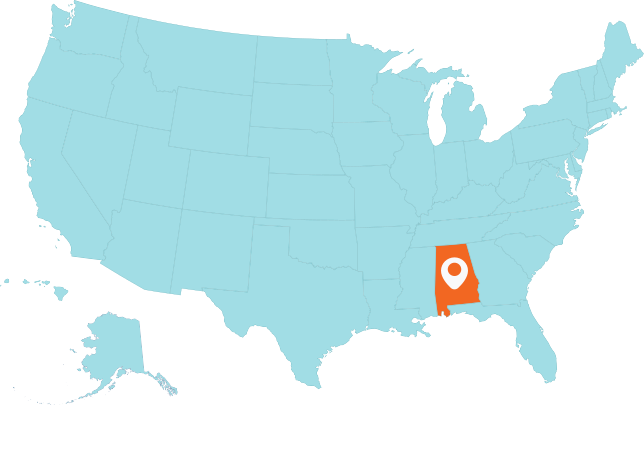
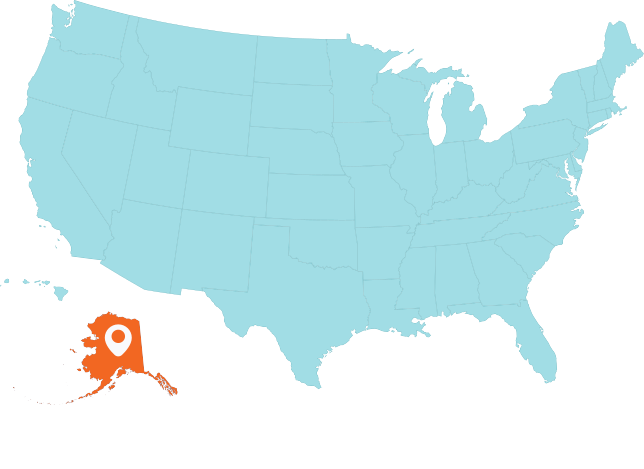
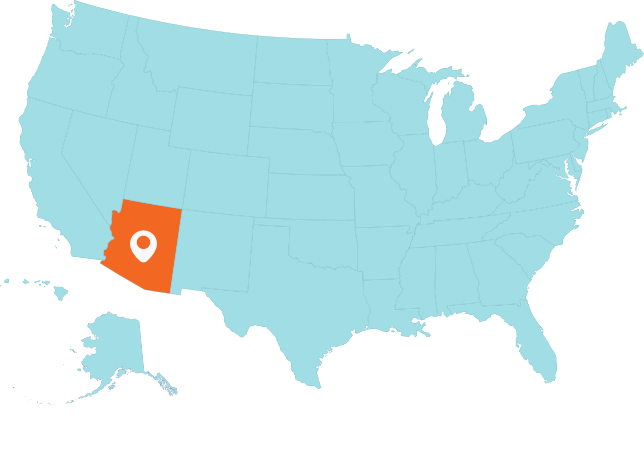
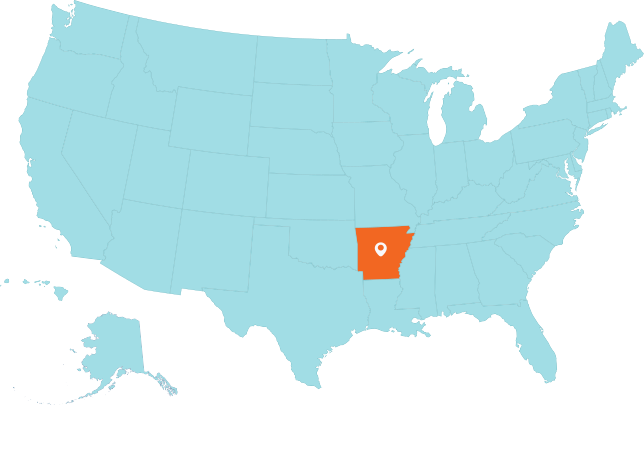
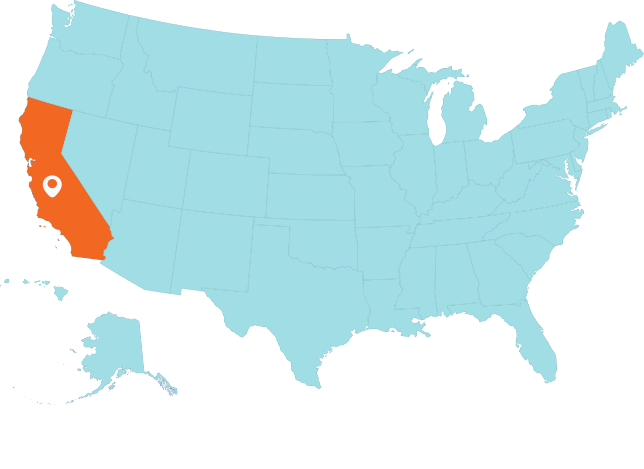
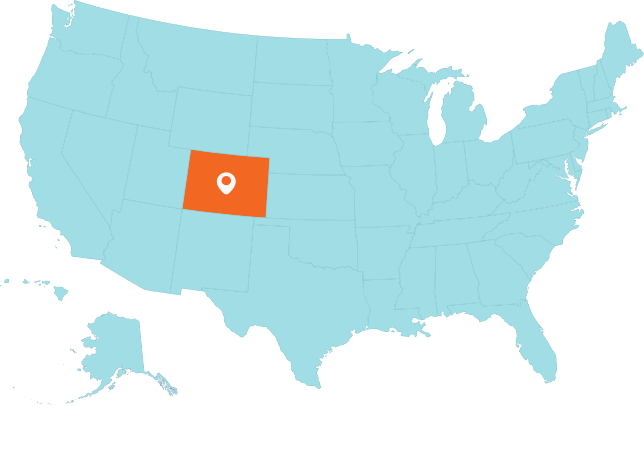
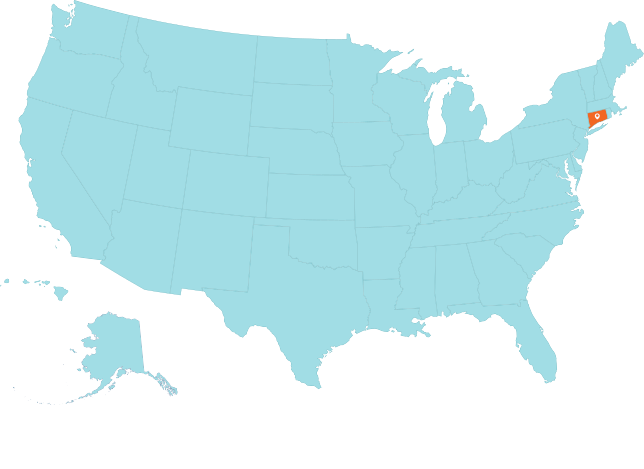
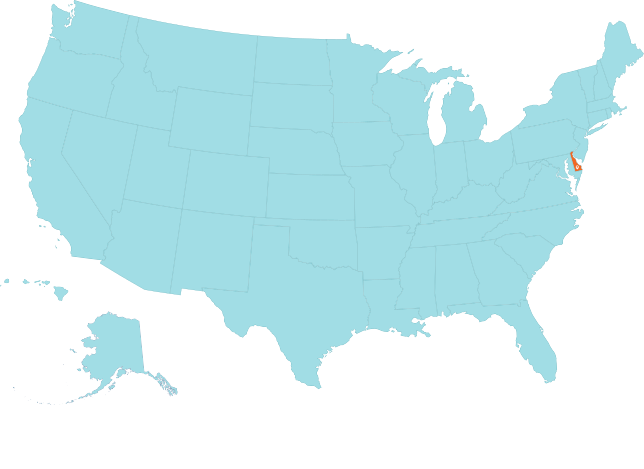
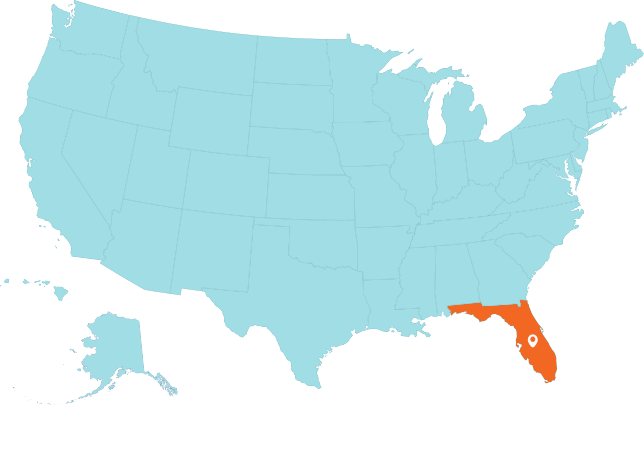
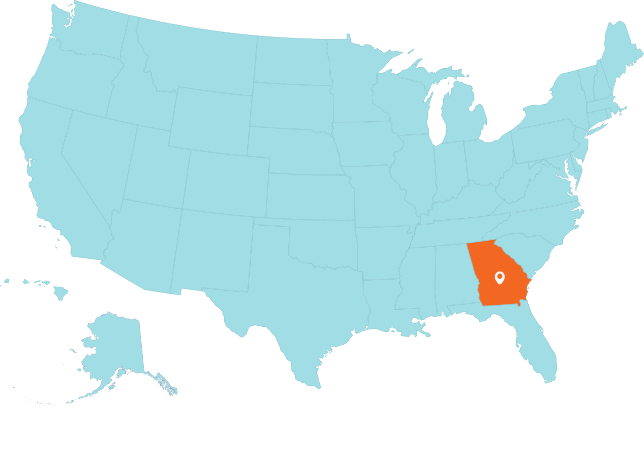
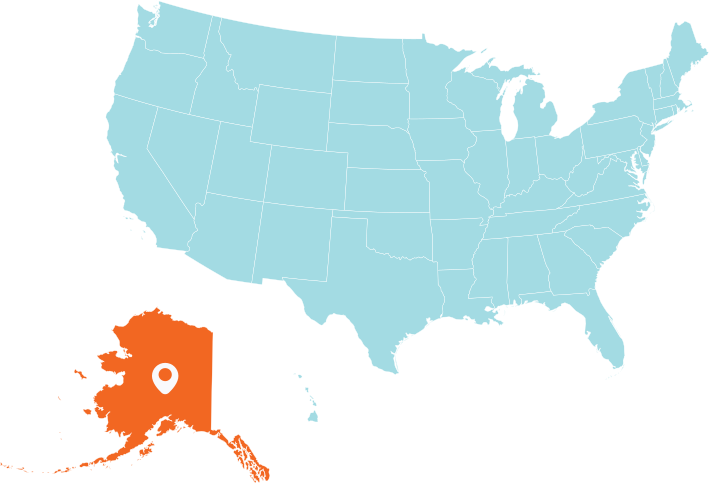
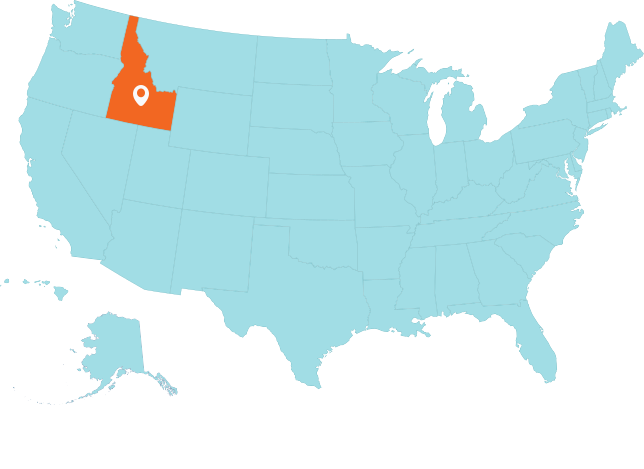
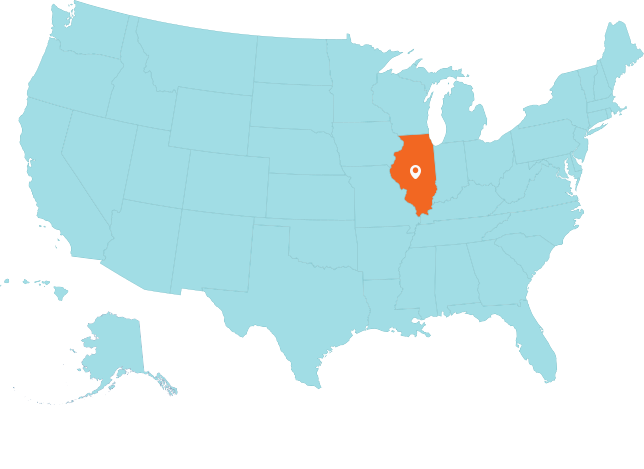
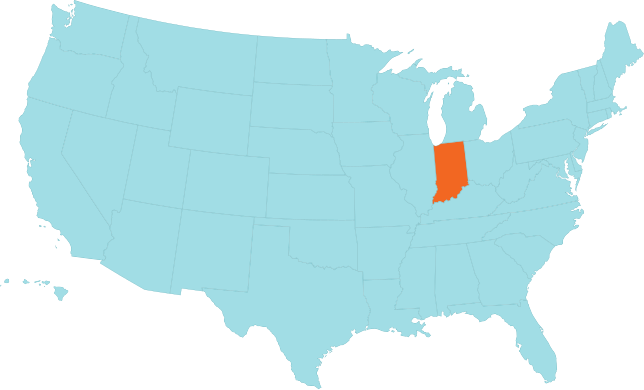
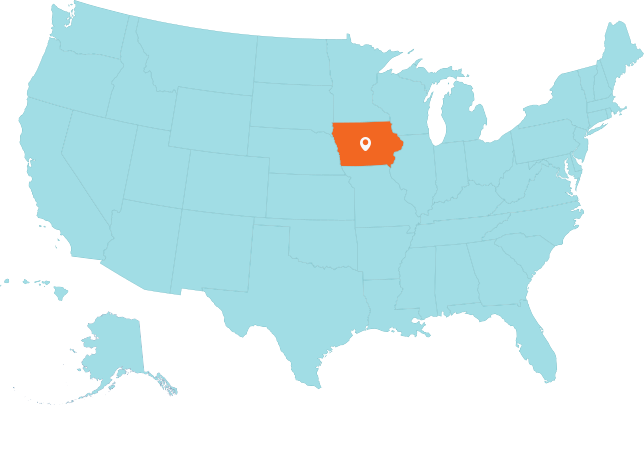
.svg)
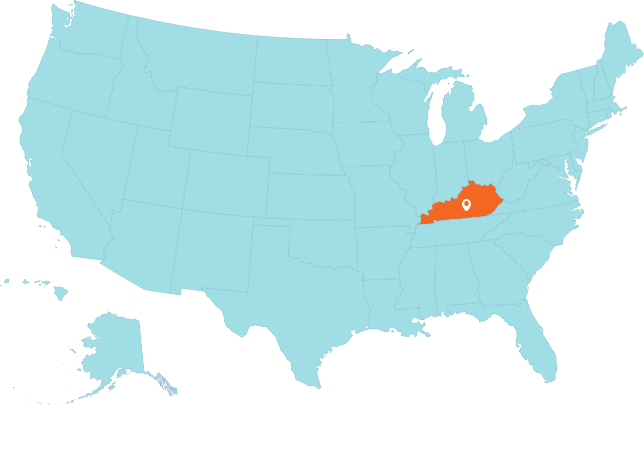
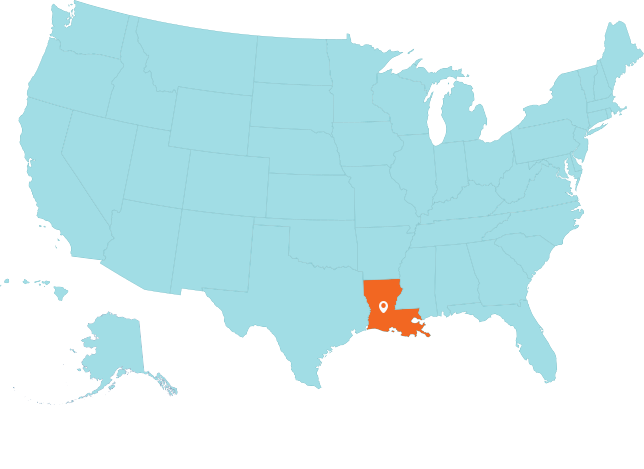
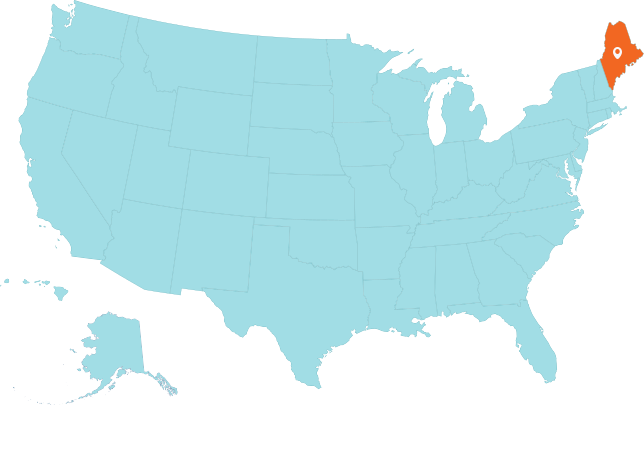
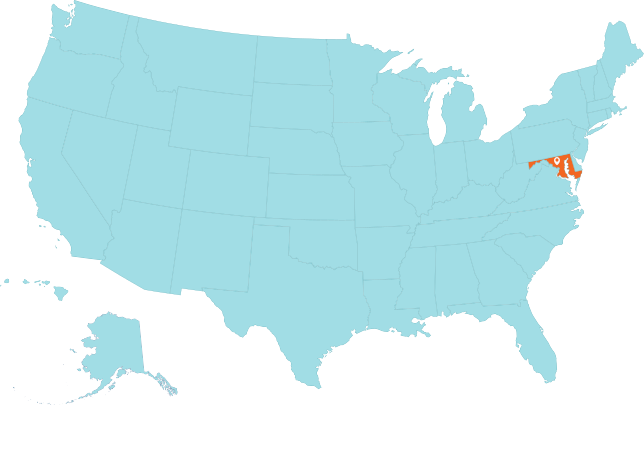
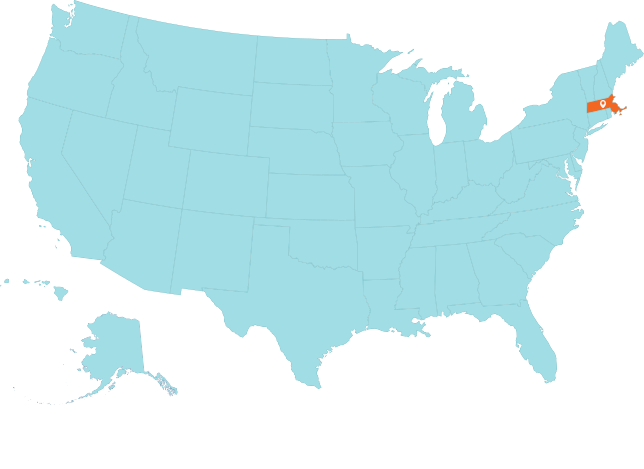
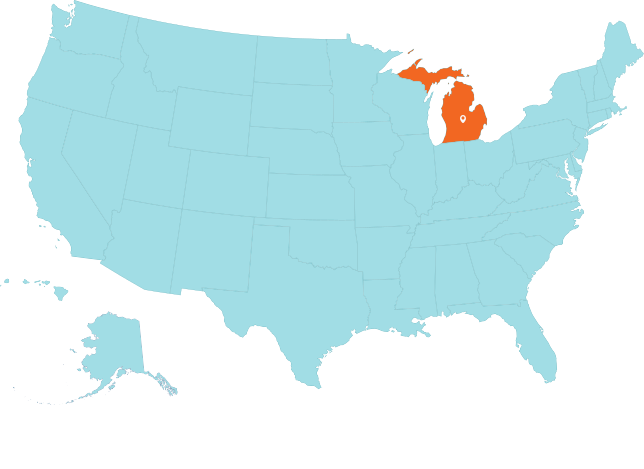
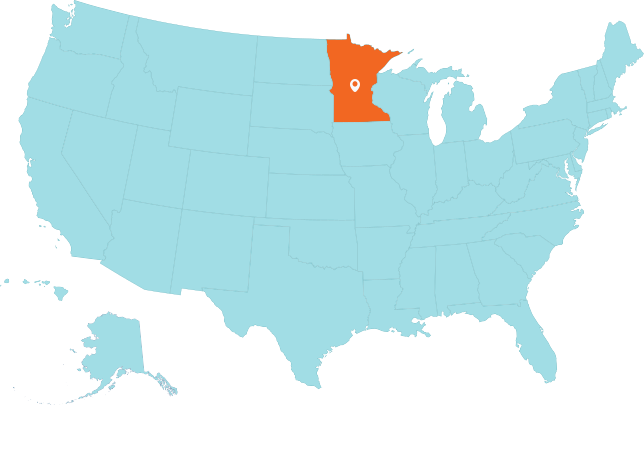
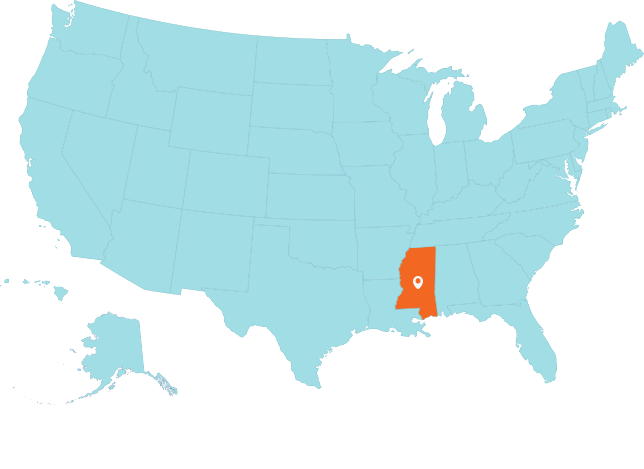
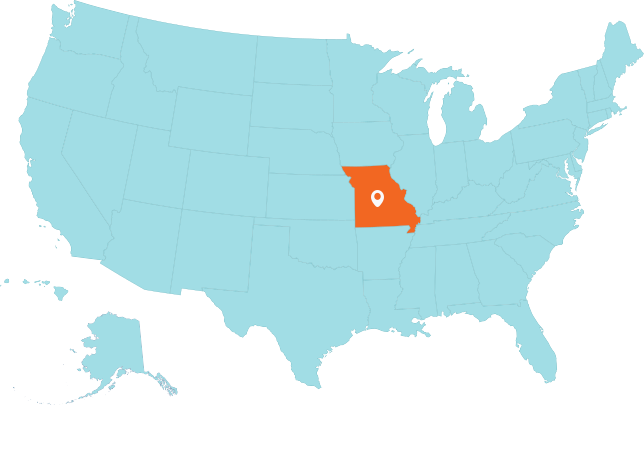
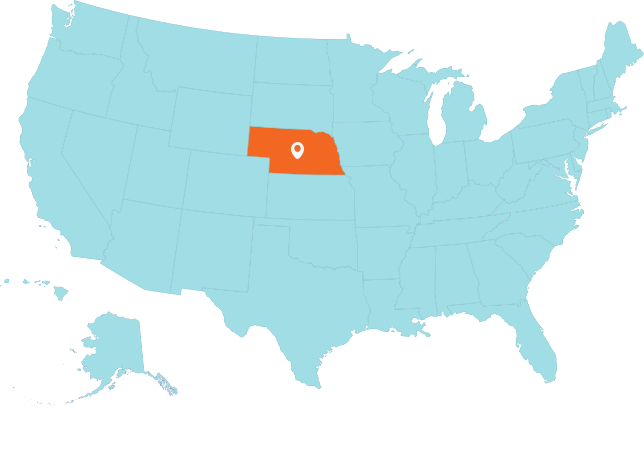
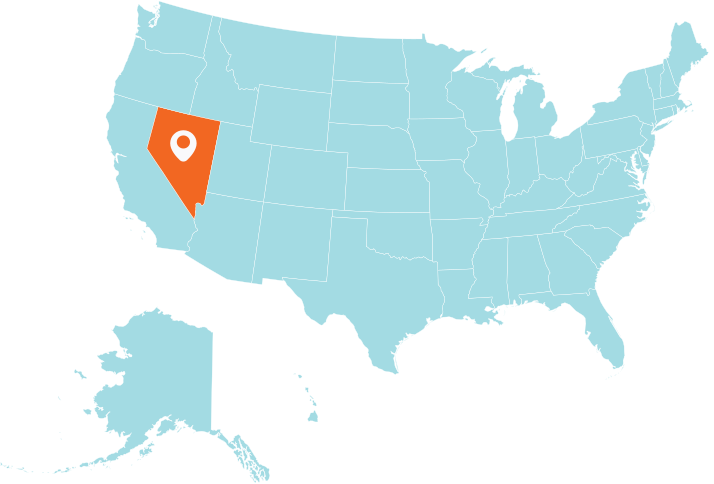
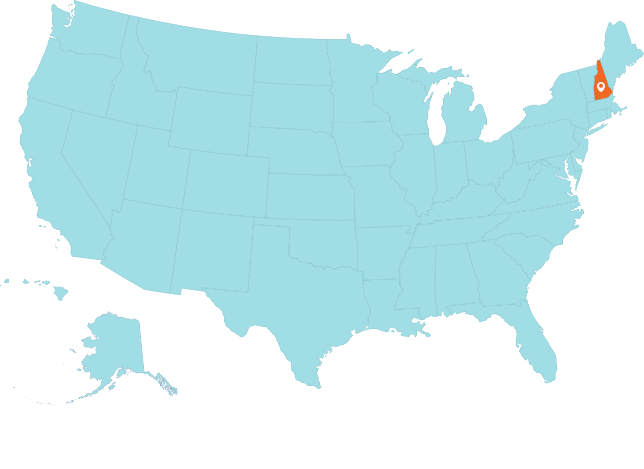
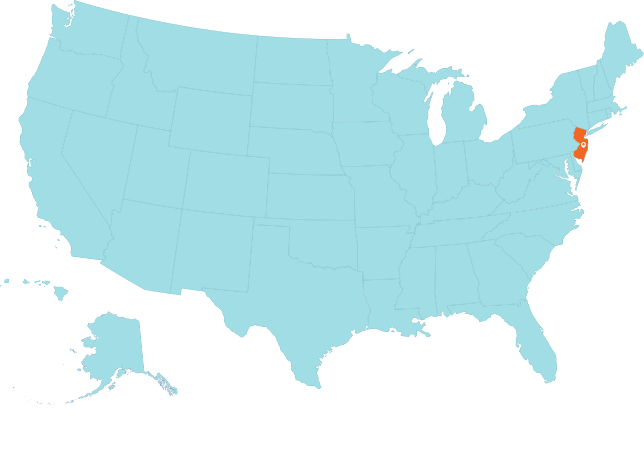
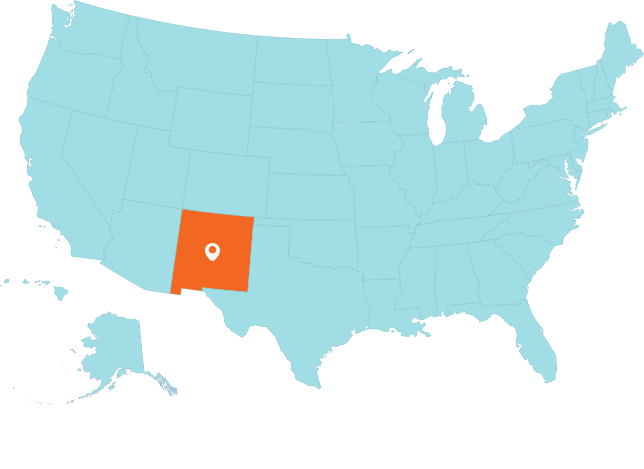
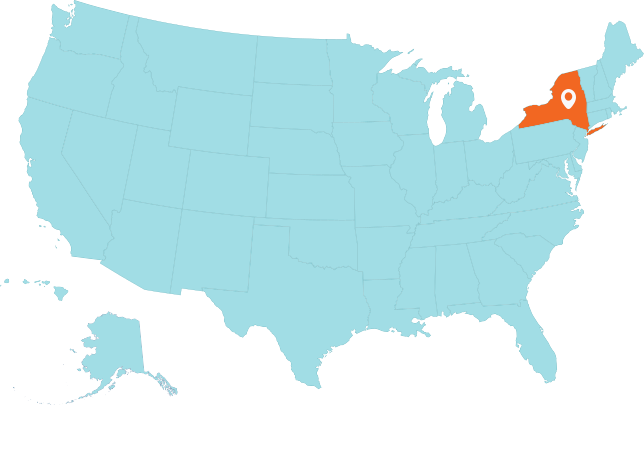
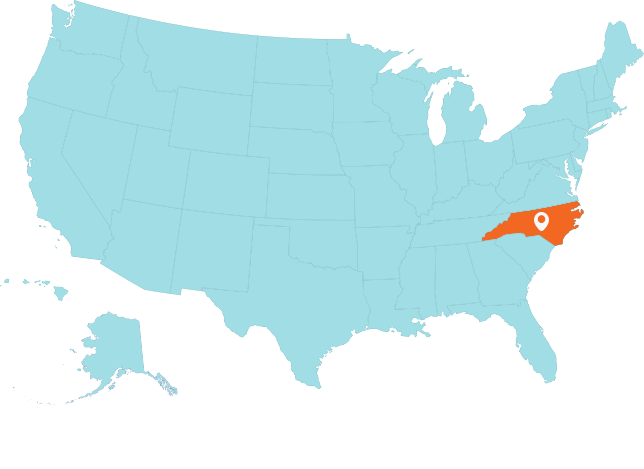
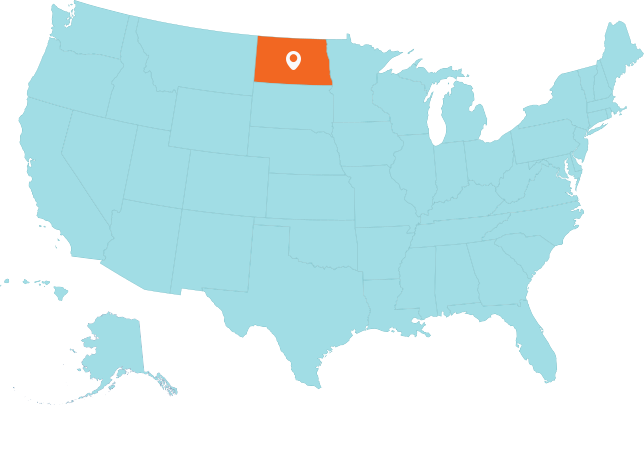
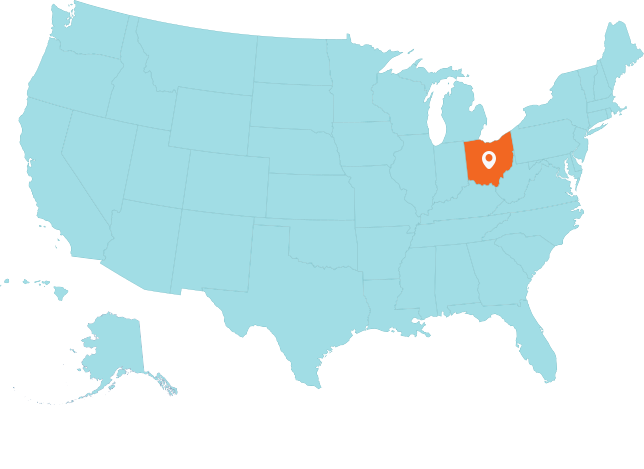
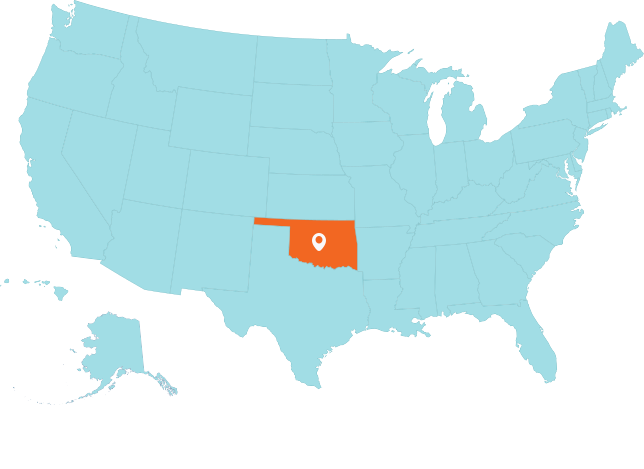
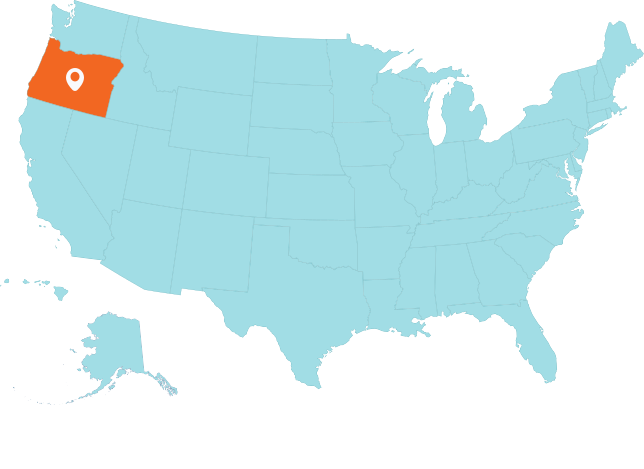
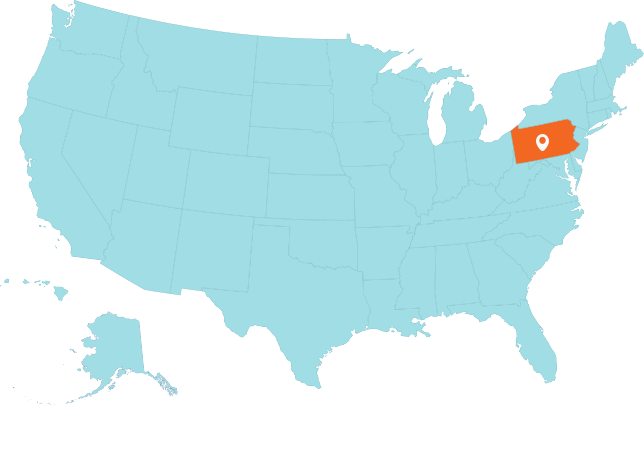
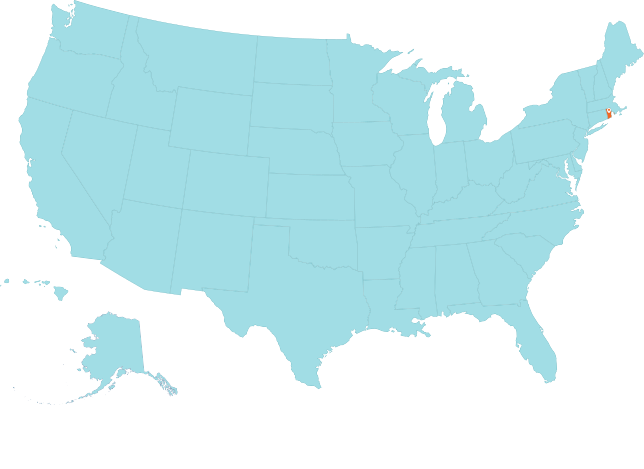
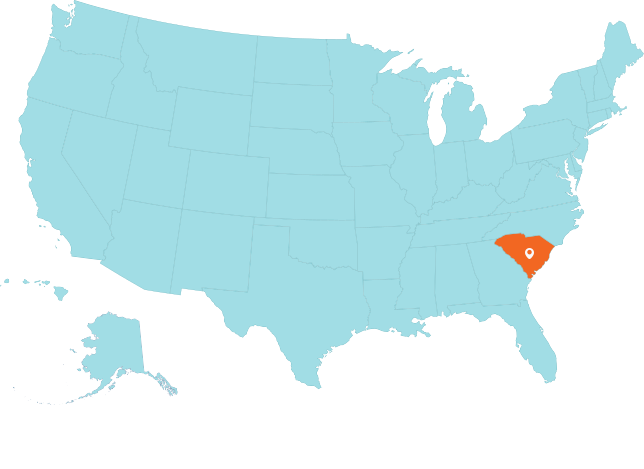
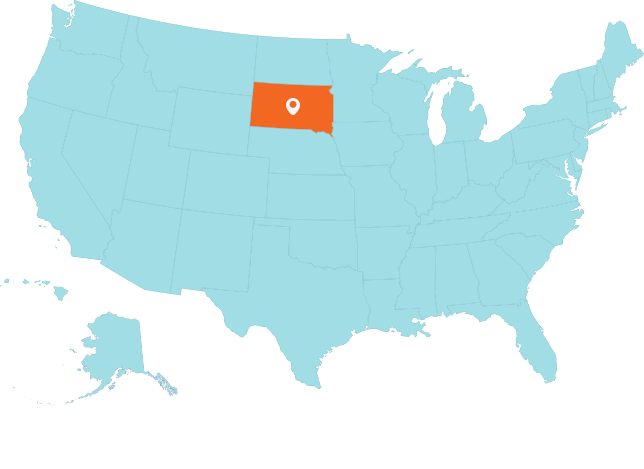
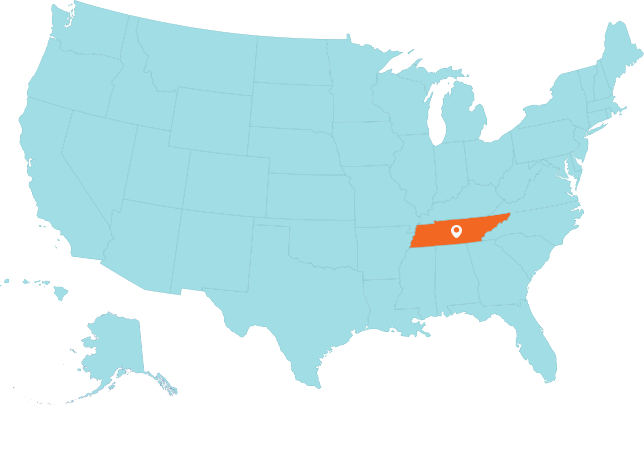
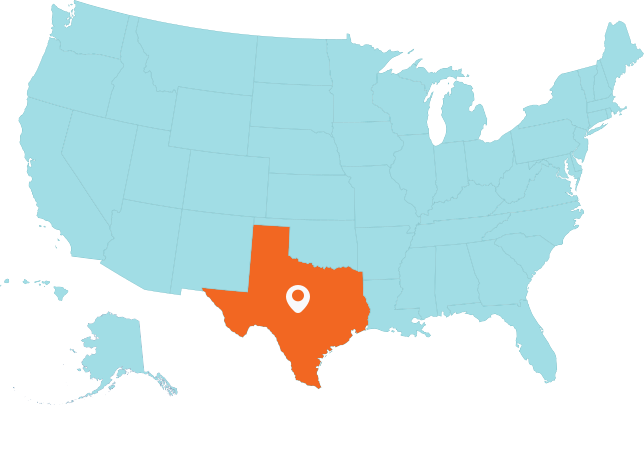
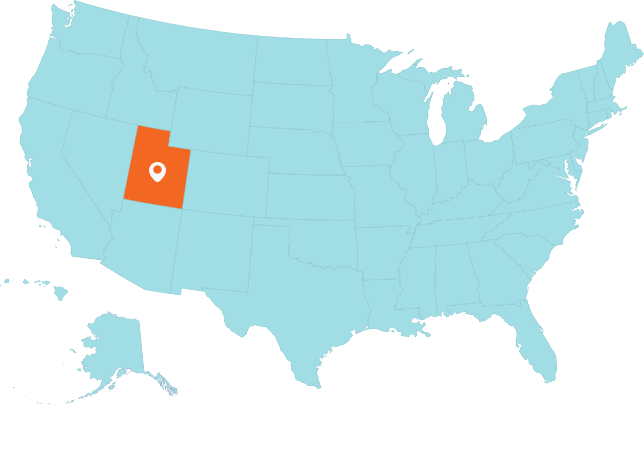
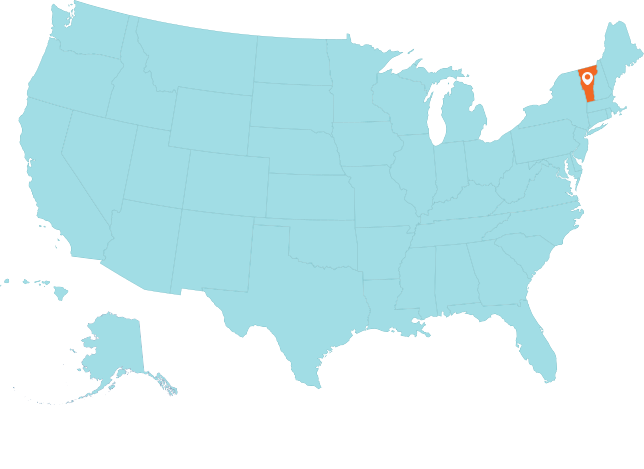
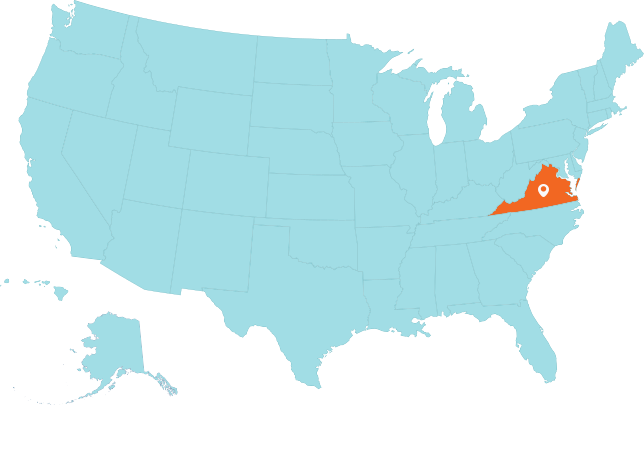


.svg)