

.svg)



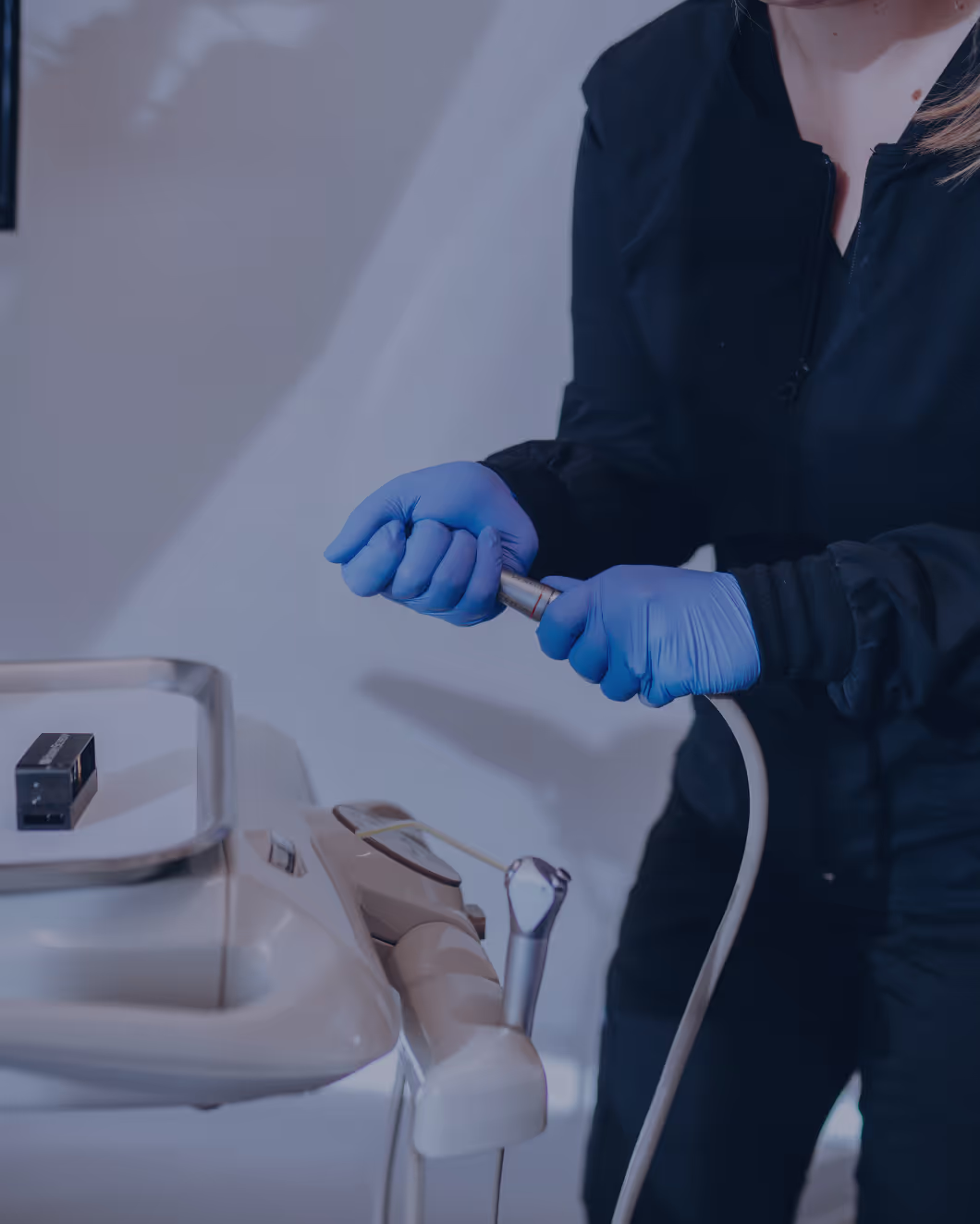
Struggling to consistently pass waterline tests? As the largest dental water lab, we’ve helped thousands of professionals crack the code with our 3-Step Protocol. Master these three steps for consistent, effective results.
The 3-Steps to Safe Water

Shock your waterlines.
Shocking is the cornerstone of your protocol. Even with proper execution of the treatment step,consistent success is unlikely without an effectiveshock product.
Learn More
.svg)



Treat your waterlines.
Treatments are low-level antimicrobials that aresafe for patients but keep fighting bacteria inbetween shocks. The better your treatment, theless shocking you need.
Learn More


Test your waterlines.
Testing is the only way to know your shock andtreatments are actually keeping patients safe. It’salso the only way to protect your practice in caseof inspection or infection.
Learn More

Why Each Step Matters

Start with Shocking
Think of it in this way, if your dental unit waterline maintenance protocol were compared to your patients’ dental routine, shocking would be equivalent to getting a professional cleaning whereas treating (with straws or tablets) would be like your daily brushing and flossing habits.
You’ve seen what happens when a patient avoids “the chair” for far too long–biofilm in the form of plaque builds up on their teeth; the same happens when lines go without a shock for too long. So, learn from your patients and be diligent with your “routine” visits.
Unfortunately, shocking is not a step that will get you extra credit in your infection prevention efforts. It is the foundational step required to have any chance against the ever-persistent and potentially dangerous biofilm.


Next, Use a Daily Treatment
Shocking your waterlines alone isn't enough to protect your patients or team from the harmful bacteria in your waterlines.
In the largest dental unit waterline study of over 22,000 waterline test results, we found that the most successful treatments in keeping waterlines compliant were a combination of shocking and treating. And, in Jean Barbeau’s study, Multiparametric Analysis of Waterline Contamination in Dental Units, he and his research team discovered that within just five days and in brand-new lines, bacteria counts can grow to 200,000 CFU/mL.
Unfortunately, simply ignoring the reality of bacteria living in waterlines will lead to the exponentially larger challenge of removing established, mature biofilm than of keeping it from growing in the first place.


Testing Your Lines is the Last Step
Regardless of what waterline treatment method you adopt in your practice, you are spending your resources (both time and money) to keep your patients safe from potential infections.
The only way to know for certain that the time you’ve invested in waterline maintenance has led down the yellow brick road to compliance is to test your waterlines. And the only way for regulatory agencies to be certain you’re compliant is to properly document and store verified waterline documentation. It’s a bit like taking a test on the first day of a new class to see what you know (or don’t). Then, you are presented with the same test again after you’ve gone through months of diligent note-taking, lecture attendance, panic studying, and sweat-inducing pop quizzes.
The only way to know if your efforts have made an impact is if there is an improvement in your results.


Monitor & Track Results with Clear™
We know that doing all that you can to achieve waterline compliance success is not an easy feat. Your to-do list is full of other tasks that need your attention, and staying on-track with safe water can often feel confusing.
With at-a-glance compliance rates, automated email reminders, just-in-time product shipments with Auto-ship, and support and resources at your fingertips, you can lighten your load and feel confident in your waterline management.
The best part? It's free!

Products Tailored to Your Needs
Explore our waterline testing products designed to support every unique need your office may have.
.avif)
.avif)
.avif)
What ProEdge Customers Are Saying
.svg)

.svg)
.png)
.svg)

%20(1).png)
Waterline Testing Resources
Waterline Testing
How to Test With a Mail-In Test Kit


Waterline Testing
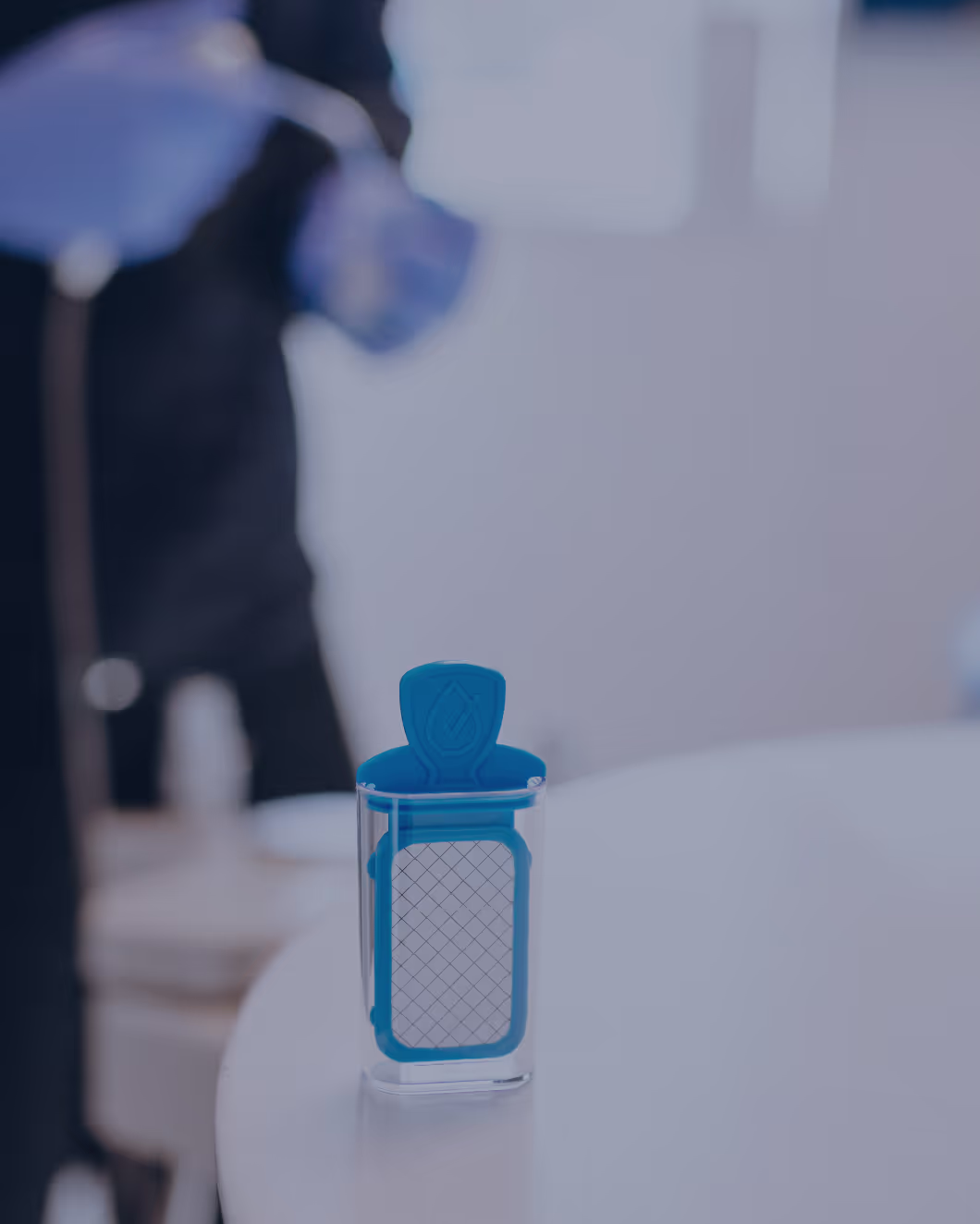
QuickPass® In-Office Dental Water Test
Waterline Testing
The 3 Steps to Safe Water

Waterline Testing Toolkits

Your Waterline Testing Questions Answered
Still Have Questions?
Get in Touch


What is dental unit waterline testing?
Dental waterline testing is the process of collecting water samples from at least one dental unit waterline and evaluating the number of bacteria present per mililiter. The results from these tests will provide a baseline (often evaluated in colony-forming units or CFUs/mL) which will be the starting point for understanding what shock and treatment protocol is required to be compliant).
What are the different tests available for dental unit waterlines?
What is germicidal neutralization?
Germicidal neutralization is the process of adding germicide to the sample vial before the water is tested. Why is this important? Because without a germicide, any antimicrobial coming from your treatment solution could skew your test results. Having a germicidal neutralizer in your test mitigates any antimicrobial that may exist in the sample, ensuring that active bacteria can begin to grow large enough to be seen on the test after the incubation period. This crucial step can protect practices from getting a false negative.
What happens when an office fails a waterline test?
You’ll never have to navigate remediation alone. If an office fails a test, the ProEdge team steps in and follows up directly with that office to begin the remediation process. We’ll be with you every step of the way until that office is back on track.
What are the CDC Guidelines for Waterline Testing?
The CDC agrees with the EPA and says that safe dental unit waterlines must be less than or equal to 500 colony forming units (CFUs)/mL. Beyond that, their rules are vague, so we’ve compiled a state-by-state guide so you can stay updated and compliant.