
.svg)

.svg)







Need help with Flo? We have resources for you!
%201.avif)
No question is too big or small! Our complaince experts are here to help you talk through challenges and find the right path forward.
Carlie is our senior infection prevention expert. She’s been diving into protocols for over 5 years and has worked with over 1,000 offices on their waterline maintenance protocols. She’ll work with you to find the perfect balance of effective and simple.

Shelley has 30+ years as an RDH for both privates practices and DSOs. She knows your heart and passion for protecting your patience and she is here to help arm you with the tools to developing a protocol that will work for you and your busy schedule.

Therese is a versatile individual who excels in fostering connections with customers, guiding them to achieve outstanding results. Leveraging her enthusiasm and efficiency to understand your needs, she drives compliance success for teams nation-wide.

Looking for helpful videos, toolkits, or FAQs for a specific ProEdge product? We've got you covered!


The CDC agrees with the EPA and says that safe dental unit waterlines must be less than or equal to 500 colony forming units (CFUs)/mL. Beyond that, their rules are vague, so we’ve compiled a state-by-state guide so you can stay updated and compliant.
All dental waterlines need to be shocked regularly– we recommend quarterly unless testing reveals you can go longer. If you are starting a waterline maintenance plan, we recommend you start by shocking.
While we have heard some product representatives say shocking isn’t necessary with certain centralized systems or treatment products, the Molinari Study proved that this is almost never the case. All lines need to be shocked regularly, regardless of the water source or continuous treatment solution used.
You should shock dental unit waterlines in any of the following situations:
• Before first beginning a treatment protocol or before changing treatment products
• Immediately after a failed test (microbial counts > 500 CFU/mL)
• During routine removal of biofilm and bacteria
• When used to replace a continuous treatment solution (this often requires weekly shocking)
If you are looking to begin shocking your waterlines, get started here!
Ultimately, closing down an operatory that has failed a test is up to the individual doctor. The most important thing is to immediately take steps to remediate a failure as soon as you’re made aware of it. Typically, the first step in remediation is shocking your waterlines and retesting, hopefully obtaining a passing result.
If you have a failing test result and need help outlining a clear path for remediation, reach out to our team – we’re here to help you!
Designating an infection control coordinator in your office is helpful to keep your patients, staff, and practice safe. This coordinator plays a key role in making sure that all the right precautions are in place to prevent infections. They’re often the office expert on everything from hand hygiene to disinfection practices, always keeping up with the latest guidelines.
Their job isn’t just about enforcing rules, though—it’s also about educating everyone in the office on how to stay safe. They organize training sessions, keep an eye on how well protocols are working, and jump into action if there’s ever an outbreak scare. By having someone dedicated to these tasks, your office can maintain a clean and secure environment for everyone. It’s all about making sure that everyone feels confident and is cared for when they come to your office.
Here are some helpful resources to help infection control coordinators get started!
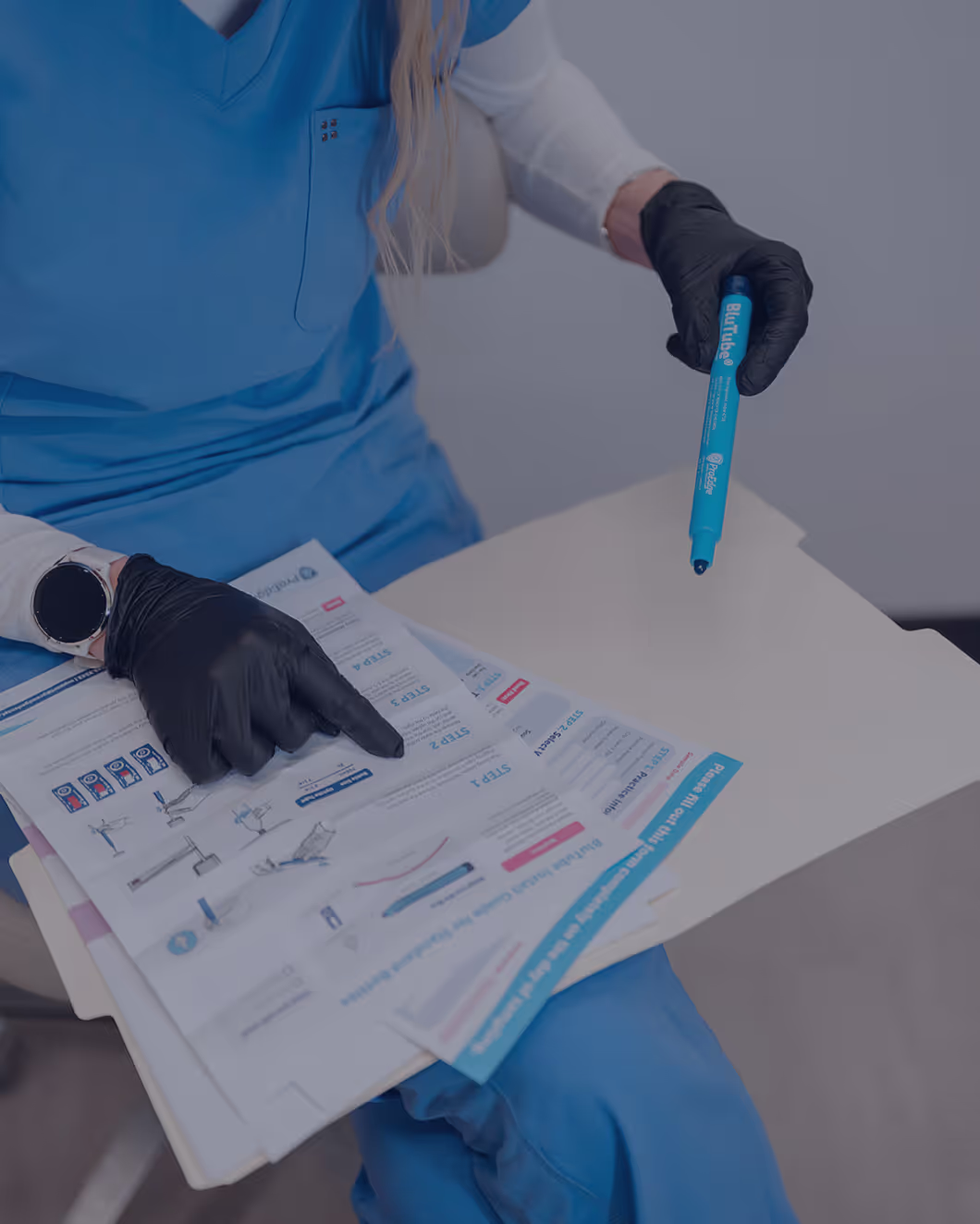
Double the straws, double the protection! Other brands claim to last for a year or for 240 liters of water, whichever comes first. In our experience, both silver and iodine straws lose strength in fighting biofilm buildup around 7-9 months after installation. This is why BluTube comes with two straws to ensure that at the critical 6-month window, you have a fresh straw to help power through for the entire year.
To learn more about how BluTube can help strengthen your waterline maintenance protocol, visit our product page.

.svg)